• Guests may view all public nodes. However, you must be registered to post.

UA-RU | Sep 18th-Mar 7th | Reports

  • Thread starter Thread starter NuclearID
  • Start date Start date
Status
Not open for further replies.
President Volodymyr Zelenskyy has signed a law allowing foreigners and stateless persons to serve in Ukraine's Military
Prior to that, foreigners could only serve in private and sergeant positions.
An explanatory note to the draft law states that the need to improve the legislation arose due to the challenging operational situation on the battlefield, necessitating a significant increase in the number of combatants in the Armed Forces and other military formations.
 
Nearly 200 former North Korean soldiers who defected to South Korea are seeking relocation to Ukraine to launch a psychological warfare campaign against their former comrades — South China Morning PostWith 7 to 10 years of military experience, they aim to use their insider knowledge to undermine and demoralize North Korean troops that may fight against Ukraine.

 
Nearly 200 former North Korean soldiers who defected to South Korea are seeking relocation to Ukraine to launch a psychological warfare campaign against their former comrades — South China Morning PostWith 7 to 10 years of military experience, they aim to use their insider knowledge to undermine and demoralize North Korean troops that may fight against Ukraine.

I have a suspicion the North Koreans are going to have a fairly high defection rate in general once they get to Ukraine.
 
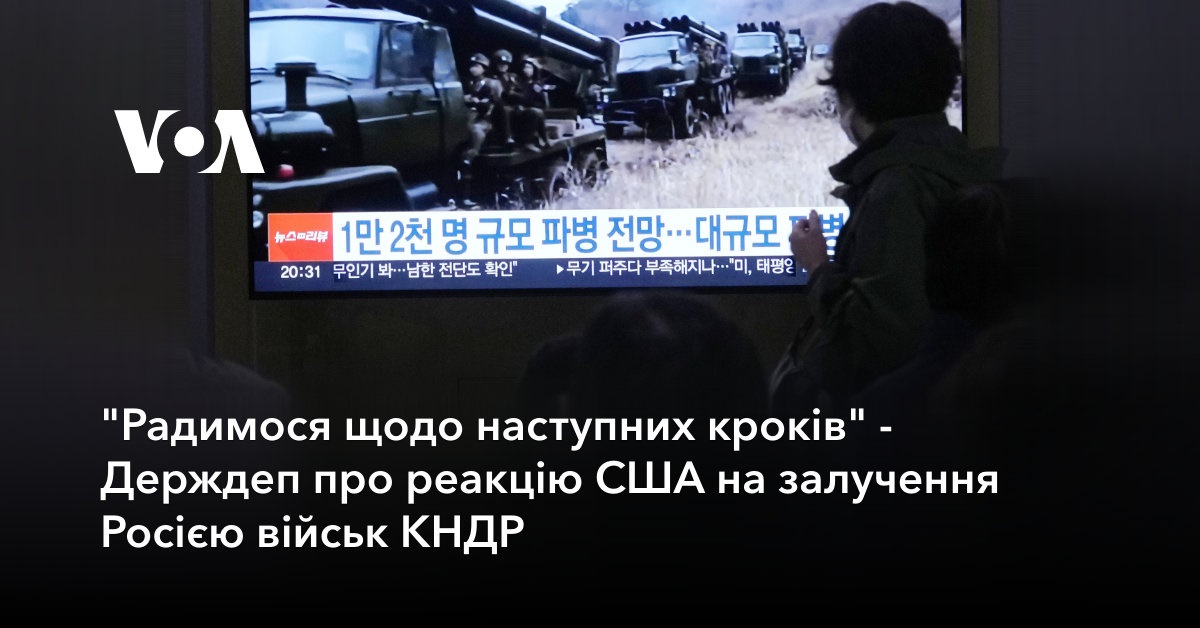
"We are consulting on the next steps" - the State Department on the US reaction to Russia's involvement of North Korean troops:
The United States is consulting with Ukrainian authorities and allies on steps to respond to the involvement of North Korean forces in the war on the side of Russia. This was stated by the spokesman of the US State Department, Matthew Miller .

"We are consulting with the Ukrainians. We are consulting with our allies and partners about the appropriate next steps. And I will keep those conversations private ... I'm not going to talk publicly about the reaction," Miller said in response to questions from reporters.

He confirmed that, according to US estimates, North Korea sent about 10,000 soldiers to Russia "for training in the east of Russia", some of whom "have been moving closer to Ukraine in recent days."
"We are increasingly concerned that Russia intends to use these soldiers in hostilities or to support combat operations against Ukrainian forces in Kursk near the border with Ukraine," the State Department spokesman said.

At the same time, Miller did not answer the question of where in Russia the North Korean military is currently located, referring to the secrecy of intelligence data.

He also noted that the US and South Korea will hold talks between the ministers of foreign affairs and defense on Thursday, October 31, during which they will discuss the deployment of North Korean troops in Russia:

"Obviously, we have a number of issues that we want to discuss with our South Korean counterparts when their foreign minister and defense minister are here. North Korea's expanding relationship with Russia, including the deployment of troops in Russia, will be one of those topics. as well as a number of other provocative actions by North Korea over the past few months, as well as our broad commitment to the security of the Indo-Pacific region."
As reported in the Pentagon , there will be no new restrictions for Ukraine on the use of American weapons against North Korean forces if they engage in battle against Ukrainian forces. This was announced by Pentagon Deputy Press Secretary Sabrina Singh on Monday.

She also noted that North Korean troops are "quite likely" moving in the direction of Kursk.

"According to our estimates, approximately 10,000 are moving to eastern Russia for training, which is going to strengthen Russian forces," she said. near the border with Ukraine".

As the Voice of America previously reported , NATO confirmed that North Korean troops have already been deployed in the Kursk region.

Observers suggest that the involvement of thousands of North Korean soldiers "will increase the pressure on the tired and overstretched army of Ukraine", but they may have a rather limited impact on the situation on the battlefield due to the lack of proper training and against the background of massive losses of the Russian army.
 
Last edited by a moderator:
  • Like
Reactions: Torch

Putin cagily acknowledges North Korean troop presence; Seoul paralyzed until U.S. election:​

Questions over whether troops would be cannon fodder, border guards or laborers

SEOUL, South Korea — Seoul is in a bind, with Russian President Vladimir Putin essentially confirming the presence of North Korean troops who could soon be deployed to the battlefield in Ukraine.

Speaking at a press briefing on Friday, Mr. Putin acknowledged that photos of North Korean troops in his country “are a serious thing.”

He was hosting a summit of BRICS leaders — representing the emerging economies of Brazil, Russia, India, China and South Africa — in Kazan.

Article 4 states that if either nation faces “an armed invasion,” the other party should “provide military and other assistance.”

Subsequently, North Korean Deputy Foreign Minister Kim Jong-gyu said, “If there is such a thing the world media is talking about, I think it will be an act conforming with the regulations of international law.”

Analysts said the comments amount to an acknowledgment by both sides that their military partnership has entered a new phase.

“This is as close to a confession as we are likely to get,” Sydney Seiler, a former U.S. intelligence officer on North Korea, wrote in a post on X.

Whether Pyongyang’s deployment will be to the front lines of the war isn’t clear, but there are signs they will engage in combat against Ukrainian forces.

“According to intelligence, the first North Korean soldiers are expected to be deployed by Russia to combat zones as early as Oct. 27-28,” Ukrainian President Volodymyr Zelenskyy said on Friday, calling that “a clear escalation.”

South Korean Defense Minister Kim Yong-hyun characterized the North Korean troops as “cannon fodder mercenaries.”

His country is struggling to forge a response.

The government in Seoul said Sunday it is sending a delegation to confer with NATO. Last week, President Yoon Suk Yeol suggested directly arming Ukraine, which would be a significant break from traditional South Korean policy.
A person familiar with diplomatic affairs told The Washington Times that Seoul is unlikely to forge any significant policies before the outcome of the Nov. 5 U.S. presidential election has been decided.

Kyiv, Seoul and Washington said last week that North Korean troops were in Russia. Estimates range from the White House figure of 3,000 troops to Seoul’s and Kyiv’s number of at least 12,000.

Those troops are difficult to disguise. Small groups of North Koreans could operate under ethnic cover in the Russian Far East, but large numbers could not. The Russian army’s only ethnically exclusive units are Chechen.

Two Russian social media clips have been widely analyzed. One purports to show armed North Koreans moving on an exercise area, and the other shows Asian troops receiving equipment in a depot.

Over the weekend, Polish media, citing Japanese sources, reported that Kim Yong-bok, a North Korean general seen in Kim Jong-un’s company, had been spotted in Russia. On X, Pyongyang watcher Lee Sung-yoon, a biographer of Kim Jong-un’s sister, identified the general as a special forces commander.

South Korean intelligence claims to have identified a North Korean missile officer formerly photographed alongside Kim Jong-un. The officer is wearing a Russian cap and holding binoculars, standing beside what looks to be a Russian officer. The two are allegedly at the launch site in Ukraine of KN-23 missiles, North Korea’s version of Russia’s “Iskander” tactical ballistic missiles.

Intelligence agencies say North Korea has been supplying Russia with massive quantities of ammunition and rocketry since late last year.

Another clip on social media shows East Asian officers in leather coats, identified but not confirmed as North Koreans, touring central Moscow and taking selfies with excited Russians.

The North Koreans could be used in combat or to “backfill” Russian units holding defenses, freeing those units for offensive operations. They also could be used as labor to rebuild the ruined infrastructure in the parts of Ukraine that Russia has captured.

Chun In-bum, a retired South Korean general, said it is “impossible” to guess their role but labor units would require only minimal arms.
North Korean loggers in the Russian Far East have been neither armed nor uniformed. Small numbers of North Korean laborers are thought to have fought in the Chechen wars as mercenaries under Russian command.

Another specialist is convinced that the North Koreans in Russia are combat troops.

“They are not labor forces. You don’t need labor forces to be armed with gear,” said Yang Uk, a military specialist at the Asan Institute for Policy Studies. “I think they are actual combat units.”

Mr. Yang said he suspects North Korea is deploying three infantry brigades and a special forces brigade. South Korean intelligence said the advance parties sent to Russia are special forces.

North Korea’s 11th “Storm” Corps, personally inspected recently by Mr. Kim, fields 14 SF brigades: 10 army, two airborne and two amphibious, Mr. Yang said.

He said these brigades are more akin to U.S. Army Rangers than smaller, Tier-1 SF such as Delta and SEAL Team 6. Rangers, trained as shock troops, are unsuited to defensive duties or border guarding, though regular North Korean infantry could undertake those roles.

Mr. Yang speculated that their likeliest area of operations would be the area captured by Ukraine in Russia’s Kursk oblast.

Last week, a Russian state TV pundit said the North Korean deployment will likely be “not on the territory that the West considers the Ukrainian land occupied by us, but on the classical canonical territory of the Russian Federation.”

The Kyiv Independent, which has led many reports of Russian troops in Ukraine, cited Ukrainian intelligence as saying North Korean troops were identified near the Kursk front last week.

South Korea’s dilemma

The North Korean military is breaking new ground. It has never undertaken a major expeditionary mission. For South Korea, memories are being resurrected.

South Korea sent 320,000 troops to fight alongside the doomed U.S. defense of South Vietnam, and South Korean businesses profited massively as contractors in the war-torn country.

Seoul is estimated to have earned nearly $1 billion in U.S. currency over nine years of war. It was a massive foreign exchange injection for what has since become a world-class industrial powerhouse.

Pyongyang is “hoping for something similar to the considerable economic and military gains that South Korea received for sending troops to Vietnam,” Doo Jin-ho, a Russia expert at the Korea Institute for Defense Analyses, told the Hankyoreh newspaper.

If North Korean troops receive pay of Russian volunteers — $3,000 to $5,000 per month — it would be “a huge boost for the North Korean economy,” Mr. Doo said.

Fighting for Moscow will also secure Russian support for Pyongyang in any peninsula contingency, he said.

South Korea’s response to these far-reaching developments has been muted.

On the diplomatic front, Seoul last week summoned the Russian ambassador for a dressing-down. On Friday, Seoul spoke out regarding the Moscow-Pyongyang strategic partnership.

“The government expresses grave concerns that Russia is proceeding with the ratification of the Russia-North Korea treaty in the midst of the North’s deployment of its troops to Russia,” a government official told news agency Yonhap.

A debate is underway over whether Seoul should reverse its policy of not arming combatant nations and start supplying weaponry directly to Kyiv.

Mr. Yoon told a Thursday briefing: “While we have maintained our principle of not directly supplying lethal weapons, we can also review our stance more flexibly, depending on the level of North Korean military activities.”

The war has boosted South Korea’s powerful arms industry, which sells tens of billions of dollars worth of hardware, including tanks, self-propelled artillery and tactical rocket systems, to NATO nations and other democracies.

In addition to arming Ukraine, South Korea could apply an economic squeeze on Russia.

Jeffrey Robertson, who teaches diplomatic studies at Seoul’s Yonsei University, said that while Korea Inc.’s shipments to Russia have been cut back since the Ukraine war began, exports to Central Asia that offer economic backdoor links to Russia have soared.
 
  • Like
Reactions: Torch

📣 🇷🇴 ​

Romania planning law to shoot down drones breaching airspace:​

BUCHAREST, Oct 29 (Reuters) - Romania could shoot down drones illegally breaching its airspace, based on threat levels and risks to human life and property, a draft law published by the Defence Ministry showed.
Romania, which shares a 650-km (400-mile) border with Ukraine, has had Russian drone fragments fall onto its territory repeatedly over the past year as Moscow attacks Ukrainian port infrastructure.
The draft law, which was put up for public debate on Monday, sets out specific conditions for Romania to control the use of its airspace both for piloted and unmanned aircraft.
Parliament will have final approval after the government clears the law.
"At a European Union level efforts continue for a unitary approach to unmanned aerial vehicles as well as to establish measures to counter risks," the draft law says.
"Black Sea military operations, the massive increase of the use of UAVs, either military or adapted for military use continue to create major risks at the Ukraine border and near Romania's border area."
The measures proposed for piloted vehicles are progressive, from establishing the aircraft's position and identity, to attempting contact, interception and warning shots.
Piloted aircraft flying without authorisation could only be destroyed only if it conducted an attack or responded aggressively to interception.
Unmanned aerial vehicles, most often drones, can be destroyed, neutralised or taken control of depending on threat levels. Destruction is a last resort.
Under the proposed law, allied systems present in Romania could also participate in any action, in agreement with collective defence treaties with the NATO and EU member.
Earlier this month, Romania's radar systems detected four separate signals, likely from drones, breaching its national airspace.

@DEFCON Warning System @RiffRaff @Irag8er
 
🇷🇺🤝🇰🇵
Small number of North Korean troops are already inside Ukraine, officials say:
A small number of North Korean troops are already inside Ukraine, according to two western intelligence officials, and officials expect that number to grow as the North Koreans complete training in eastern Russia and move toward the front lines of the war. The North Korean troops’ presence inside Ukraine goes a step beyond what NATO and the Pentagon confirmed on Monday, which is that roughly 10,000 North Korean troops are training in eastern Russia with some en route to Russia’s Kursk region. Ukrainian troops have held territory inside Kursk since August.
“It seems that a good many of them are already in action,” one of the officials said on Tuesday, referring to the North Koreans. Ukrainian President Volodymyr Zelensky said last week that Ukrainian intelligence assessed that the troops would start to enter combat zones on Sunday. A US official said the US can not yet corroborate reports that North Koreans troops are already inside Ukraine. The US has been playing catchup, however, when it comes to North Korea’s deployments — US officials did not confirm publicly that the troops were in Russia until weeks after South Korea first alleged it.
US and South Korean diplomatic and military officials are meeting in Washington, DC this week to discuss the deployment and North Korea’s “expanding relationship with Russia” more broadly, State Department spokesperson Matthew Miller said on Monday.
 
Last edited by a moderator:
  • Like
Reactions: Torch
Putin Launches Drills of Russia's Nuclear Forces Featuring Retaliatory Strikes
Russian President Vladimir Putin on Tuesday launched a massive exercise of the country's nuclear forces featuring missile launches in a simulation of a retaliatory strike, as he continued to flex the country's nuclear muscle amid spiraling tensions with the West over Ukraine.

Putin, who has repeatedly brandished the nuclear sword as he seeks to deter the West from ramping up support for Ukraine, emphasized on Tuesday that Russia's nuclear arsenal remains a "reliable guarantor of the country's sovereignty and security."

“Taking into account growing geopolitical tensions and emerging new threats and risks, it's important for us to have modern strategic forces that are always ready for combat,” he said, reaffirming that Russia sees nuclear weapons use as “the ultimate, extreme measure of ensuring its security.”
Putin noted that Moscow will continue to modernize its nuclear forces, deploying new missiles that have a higher precision, quicker launch times and increased capabilities to overcome missile defenses.

As part of Tuesday's drills, the military test-fired a Yars intercontinental ballistic missile from the Plesetsk launch pad at the Kura testing range on the Kamchatka Peninsula, the Defense Ministry said. The Novomoskovsk and Knyaz Oleg nuclear submarines test-fired ICBMs from the Barents Sea and the Sea of Okhotsk, while nuclear-capable Tu-95 strategic bombers carried out practice launches of long-range cruise missiles.
The ministry said that all the missiles reached their designated targets.
 
  • Like
Reactions: Torch
Ukraine and Russia in talks about halting strikes on energy plants:

Scoop with @maxseddon & @cornishft: Ukraine and Russia are in preliminary discussions about halting strikes on each other’s energy infrastructure. Kyiv is seeking to resume Qatar-mediated negotiations that came close to agreement in August before Kursk.
 
Putin Launches Drills of Russia's Nuclear Forces Featuring Retaliatory Strikes
More confirmation of this.
 
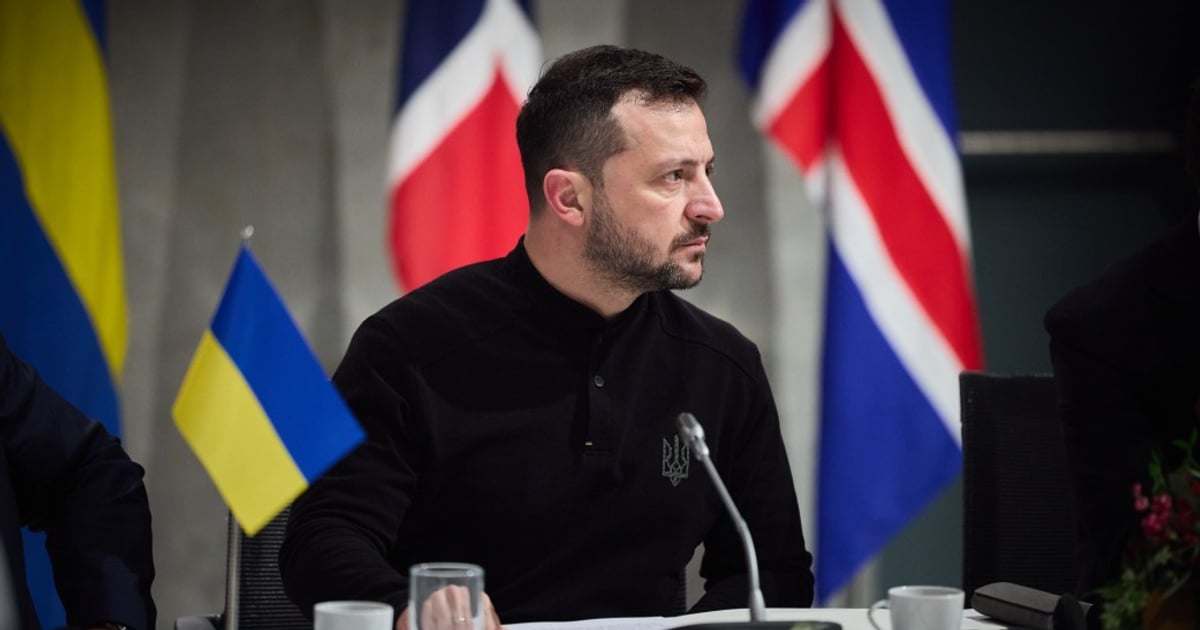
Zelensky: The winter ahead will be decisive, with blackouts and difficulties:
The coming winter will be a "big challenge" for Ukraine, in particular, there will be blackouts.

The President of Ukraine, Volodymyr Zelenskyi, said this in an interview with the leading mass media of the Northern European countries.

In his opinion, today's defense of Ukraine is "joint work." He recalled that many support agreements had been concluded with partners.
However, the president said that Ukraine has still not received the promised number of air defense systems from its partners. Therefore, currently Kyiv cannot count on much support for air defense during the heating season.

"You are preparing the country for the winter, which is decisive, which is a big challenge, a very big challenge for us, because it will be the third winter with blackouts, with all the difficulties," he added.

We will remind, the acting chairman of "Ukrenergo" Oleksiy Brecht warned that this winter may be one of the most difficult in the previous three years . The company is preparing for the worst-case scenario.
According to him, the worst scenario is if Russia continues massive attacks on generation facilities. In this case, power outages can last up to 8 hours.
 
Status
Not open for further replies.
Back
Top Bottom