• Guests may view all public nodes. However, you must be registered to post.

Congress wants to restore nukes on conventional B-52 bombers

william

Power Poster IV
Donator
Major Contributor
Joined
Mar 3, 2021

Congress is laying the groundwork to restore nuclear weapon capabilities on roughly 30 B-52H Stratofortress bombers that had been converted to drop only conventional munitions as part of the New START arms control treaty with Russia.

Both the Senate and House defense policy bills for fiscal 2025 would require the Air Force to once again make these conventional bombers part of the nuclear triad nearly a decade after removing those capabilities to comply with limits under the New START treaty. The current treaty is set to expire in February 2026.
Lawmakers are eager to beef up the U.S. nuclear arsenal given Russia’s suspension of the treaty and China’s rapidly expanding strategic warhead production. Opponents of the measure argue that the directives will make it more difficult to negotiate a new treaty while complicating efforts to significantly extend the lifespan of the B-52 bomber fleet first introduced during the Cold War.

“The treaty expires in 2026, and the prospect of Russia coming to the table for serious arms control discussions is incredibly unlikely,” House Armed Services Chairman Mike Rogers, R-Ala., said last week upon introducing the amendment to the FY25 defense policy bill, legislation the House passed 217-199 on Friday. “We need to be prepared to face a nuclear environment without any treaty limitations.”

The House bill would require the Air Force to begin reconverting the bombers within a month after the current treaty expires and complete the restoration of their nuclear capabilities by 2029.
 

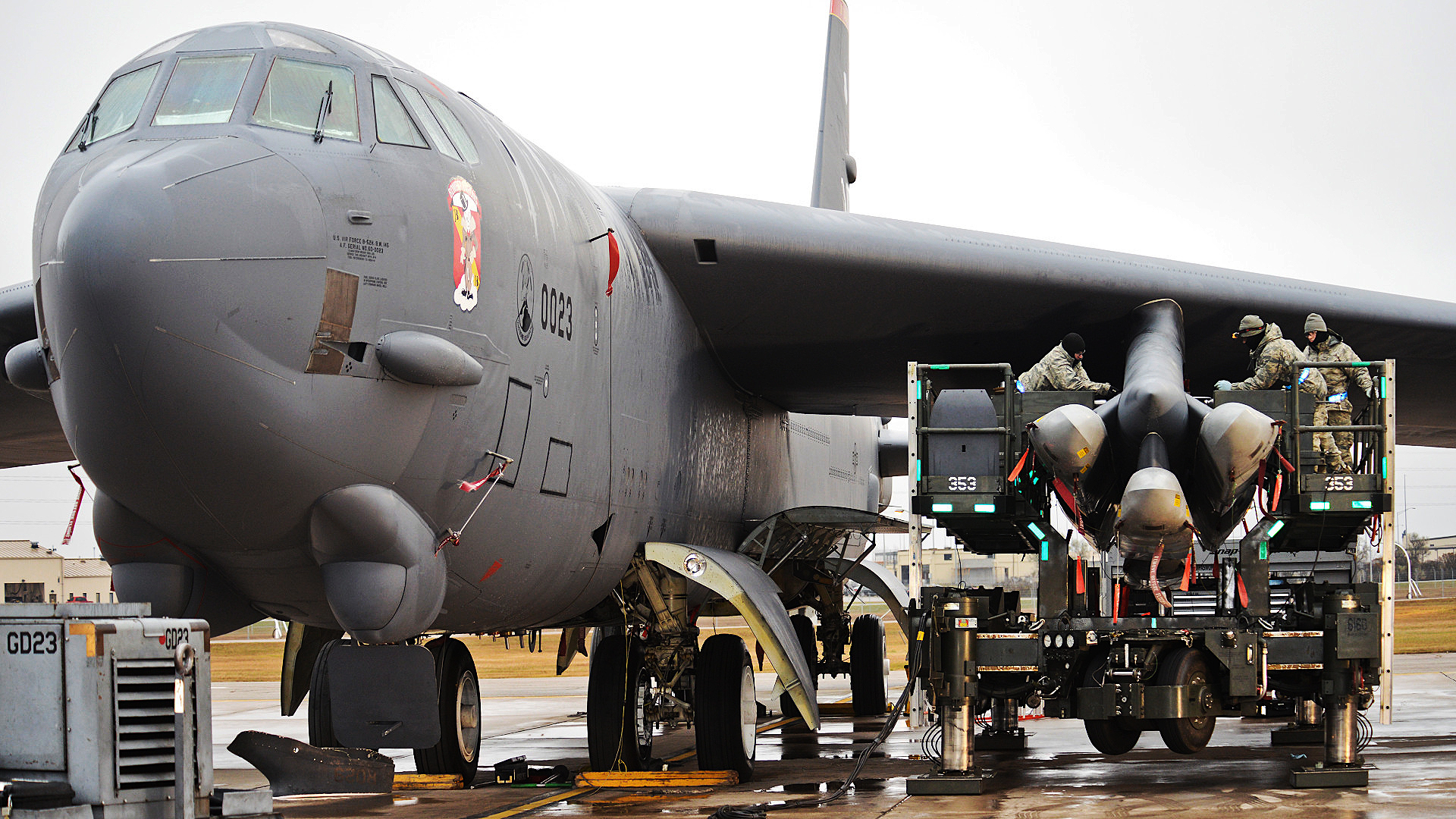
What It Will Take To Make The Entire B-52 Fleet Nuclear-Capable​

“The restoration could probably be done without much difficulty. The necessary wiring is probably still in place… and physical components that had been removed could be re-installed,” Defense News reported last week, citing Mark Gunzinger, currently Director of Future Concepts and Capability Assessments at the Air & Space Association’s Mitchell Institute for Aerospace Studies. Gunzinger is also an Air Force veteran who flew B-52s. Suitably configured B-52s are also in line to be armed with forthcoming AGM-181A Long Range Stand-Off (LRSO) cruise missiles, which will supplant the AGM-86Bs they currently employ in the nuclear strike role. The AGM-86B is currently the only nuclear weapon the bombers are certified to carry.
“Three years ago the U.S. side declared its intention to convert B-52H heavy bombers by rendering them incapable of employing nuclear armaments by removing the nuclear code enabling switch and interconnection box, mounting a code enabling switch inhibitor plate, removing applicable cable connectors, [and] capping applicable wire bundles,” according to the letter. “However, in the course of the exhibition [of the first denuclearized B-52H in 2015] the Russian inspectors were unable to verify that the conversion procedures declared and applied by the United States satisfy the Treaty requirement on rendering a heavy bomber incapable of employing nuclear armaments.”

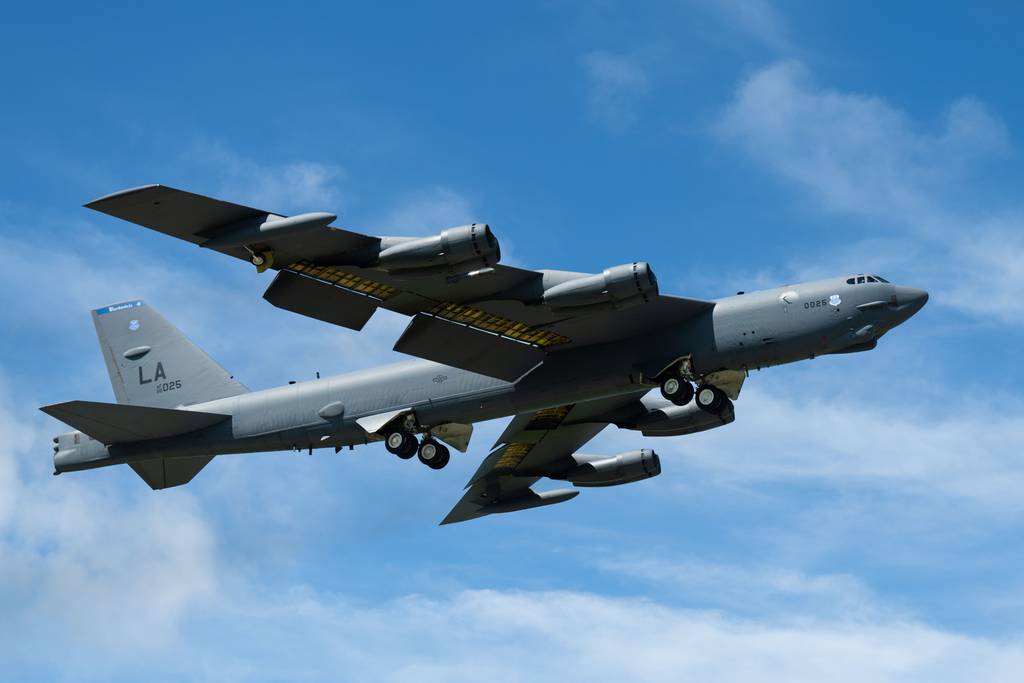
What additional steps the U.S. military took in response to these complaints are not entirely clear. It is known that declared conventional-only B-52Hs also lack a pair of prominent antennas, one on either side of the rear fuselage, making it easy to visually distinguish them from nuclear-capable ones.
The likely end of New START has prompted concerns about a new nuclear arms race well beyond the possibility of just restoring nuclear capability to the entire B-52 fleet. When it comes to the American nuclear arsenal, members of Congress are also pressing the U.S. military to field a new nuclear-armed sea-launched cruise missile. There has been talk about loading the Air Force’s future LGM-35A Sentinel intercontinental ballistic missiles (ICBM) with multiple warheads, as well. The service’s existing LGM-30G Minuteman III ICBMs each only have a single warhead currently due to arms control agreements with Russia. There are also concerns about the potential for a broader global nuclear build-up in response to developments in the United States and Russia absent a replacement for New START. Whatever it might take the Air Force to give nuclear capability back to all of its B-52 bombers in the end, Congress is pressing ahead with plans to compel the service by law to do so in the increasingly likely event that New START expires without a replacement.
 
Back
Top Bottom