



- Joined
- Mar 3, 2021
Defense contractor Anduril has rolled out a new, readily deployable undersea surveillance system called Seabed Sentry, which uses networks of small and relatively low-cost modular sensor nodes. A novel sonar array with a design influenced by the extendable arms on satellites is the main sensor being paired with it now. Expanding fleets of quieter and otherwise more modern submarines, especially in Russia and China, as well as growing threats to critical undersea infrastructure, are driving demand for more and better ways to monitor what happens beneath the waves across the Western world.
“Surface and air vehicles can operate with clear lines of sight and reliable connectivity, but the ocean is vast and opaque, leaving current autonomous subsea sensing and communications technology operating slowly in silos. We need a network for real-time data exchange to reliably transmit information into action,” per a press release from Anduril. “Seabed Sentry fills connectivity and perception gaps, enabling maritime awareness and kill chains in ways not currently possible without high expense. With superior endurance lasting months to years, a depth rating exceeding 500 meters, a payload capacity of over 0.5 m³, and a modular, reusable design, Seabed Sentry is built to surpass existing seabed surveillance solutions. It offers operators greater flexibility and capability in even the most challenging underwater environments.”
“Unlike fixed seafloor surveillance systems – which are expensive to place and maintain – Seabed Sentry is a network of ‘cable-less’ deep-sea nodes that sense, process, and communicate critical subsea information at the edge in real time,” the release adds. “It has an open systems architecture for rapid integration of first or third-party sensors and payloads customized to the commercial or defense missions including seabed survey, marine pattern of life building, port security, critical infrastructure protection, anti-submarine warfare, and anti-surface warfare.”
Once extended, Sea Spear functions primarily in a passive mode. However, it can be used in combination with other systems, including air-dropped sonobouys with active sonars, to provide additional functionality.
Anduril notably envisions Seabed Sentry nodes being emplaced and recovered using UUVs, as well as via ships on the surface. This, in turn, would allow arrays to be deployed covertly or clandestinely, and in denied or otherwise sensitive areas. This also makes the system more unpredictable overall, which is a major advantage.
“So we can load up the Dive XL [a large UUV in Anduril’s larger portfolio also known as Ghost Shark] with about a dozen of these things, go and place them on the sea floor wherever you want, [and] do that completely covertly [or] clandestinely,” Arnott said. “If you want to lay a trip wire or set a net for threats, it’s a good idea for them not to know where your security cameras are, for want of better words.”
There are certainly clear demand signals for new and improved undersea surveillance capabilities, and the ability to acquire and field more of those systems at lower costs, coming from the U.S. military and the armed forces of other Western countries. In particular, American officials have been warning for years now that new Russian and Chinese submarines are increasingly harder to detect and track, and present new threats, including to the U.S. homeland, as a result. Russia’s expanding fleet of ultra-quiet Yasen-M class nuclear guided missile submarines, one of which made a visit to Cuba last year, are often held out as particularly concerning. UUVs are also emerging as a problem set that could outpace crewed submarines.
“The trend of approaching our coast from both Russia[n] and Chinese submarines is increasing,” U.S. Air Force Gen. Gregory Guillot, head of U.S. Northern Command (NORTHCOM) and the U.S.-Canadian North American Aerospace Defense Command (NORAD), told members of Congress during a hearing just yesterday. “We need an expanded undersea detection capability to ensure that we are aware of these and can properly posture to defend against submarine launched cruise missiles or ballistic missiles.”
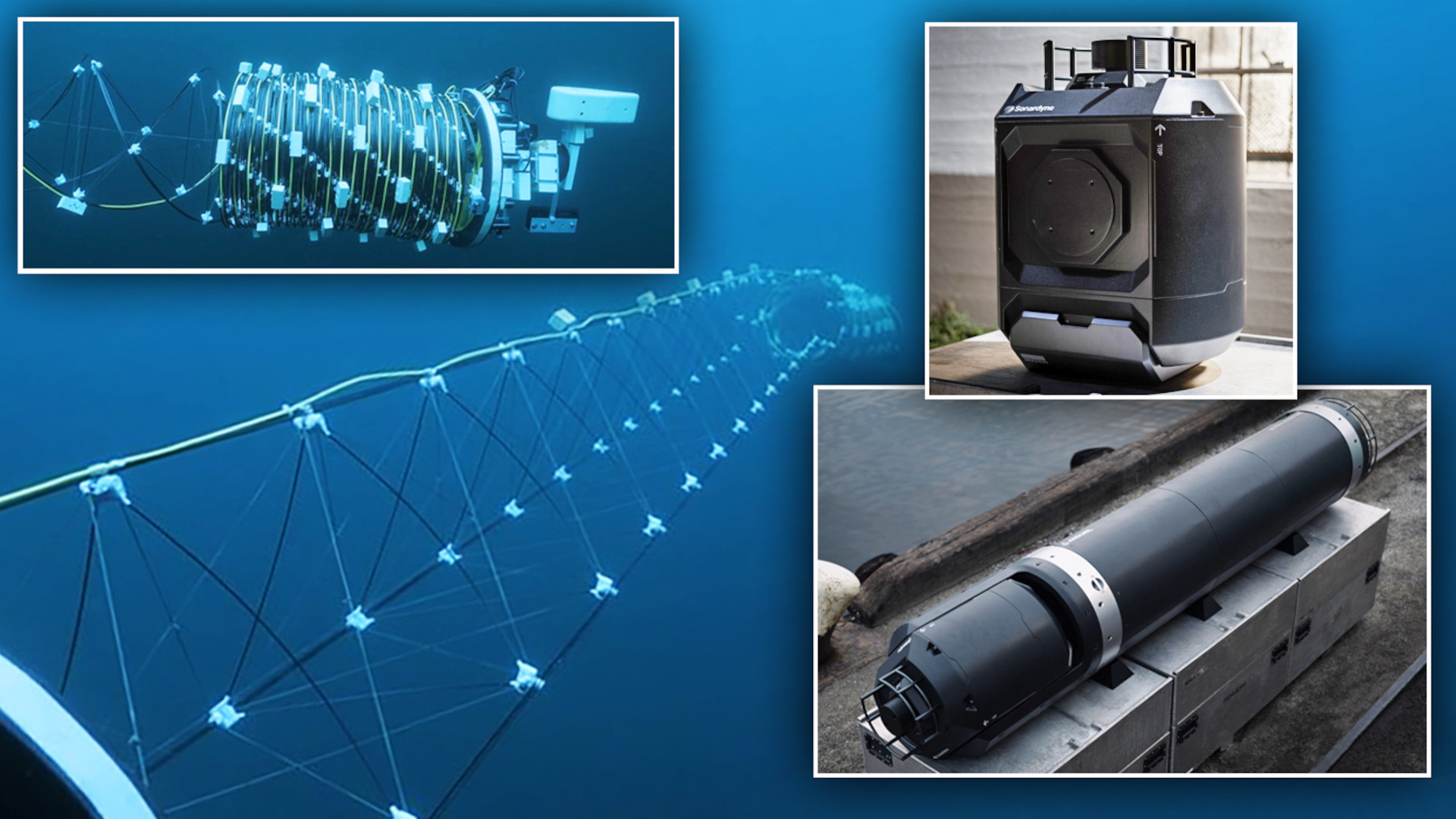
Submarine Surveillance System That's Rapidly Deployable, Unpredictable Unveiled By Anduril
Seabed Sentry aims to make underwater listening networks far more adaptable and affordable, putting enemy submarines and other threats in the crosshairs.www.twz.com


