



- Joined
- Mar 3, 2021
The U.S. military’s Low-Cost Uncrewed Combat Attack System, or LUCAS, the recently combat-proven long-range one-way attack drone designed for massed operations, will be equipped with Hivemind autonomy software from Shield AI. The company was selected for the integration effort by the Office of the Under Secretary of War for Research and Engineering (OUSW R&E) as part of an effort to bring AI-enabled swarming and autonomous teaming to LUCAS.
Based on the Iranian Shahed-136, LUCAS was used in combat for the first time when a large number of them were fired against Iranian targets in the opening salvos of Operation Epic Fury, the U.S. part of the joint U.S.-Israeli attack on Iran that began on February 28 of this year.
But the US is not helping Ukraine right!Under the new effort, Hivemind will act as an AI “pilot” for LUCAS, allowing groups of drones to coordinate movements, maneuver collaboratively, and adapt to changing battlefield conditions in real time. Shield AI’s Brandon Tseng explained that much of the work on inserting the Hivemind AI pilot into LUCAS has already been proven by the company’s experiences working with Ukraine.
“LUCAS is a reflection of about two years’ worth of work with OUSW R&E, and a reflection of a lot of the work that we’re doing in Ukraine with one-way attack drones,” Tseng explained. “For the past several months, we’ve been shipping hundreds of AI pilots for one-way attack drones into Ukraine. Those drones have increased the probability of a kill. They have reduced [the] kill chain timeline, they have reduced the cost per effect, instead of, one out of every 10 of these one-way attack drones hitting their target, now they’re 10 out of 10 in terms of what we’re seeing, and it’s really about taking a lot of that development that we’ve done over in Ukraine and bringing it to a program like LUCAS to again increase probability of kill, reduce cost per effect, and increase probabilities of success.”

In the Ukrainian context, Tseng confirmed that its AI agents are employed across a range of uncrewed platforms. At one end of the scale, these include one-way attack drones with a range of around 62 miles and an overall cost of $8,000, out of which the AI pilot costs around $1,000. At the other end of the scale are much larger and more expensive drones and missiles, including cruise missiles from the Switzerland-based Destinus company.
Returning to the U.S. military, the current effort began with Shield AI working on collaborative autonomy with OUSW R&E, something that began before the second Trump administration. That work was carried forward until the company was one of several down-selected to provide AI pilots for LUCAS.
The effort could represent a significant step toward fielding collaborative autonomy, a long-term goal of massed drone operations, with teams of autonomous systems operating together in dynamic and highly challenging combat environments. These could include ones where GPS is denied and communications are degraded, due to heavy employment of electronic warfare by the enemy.
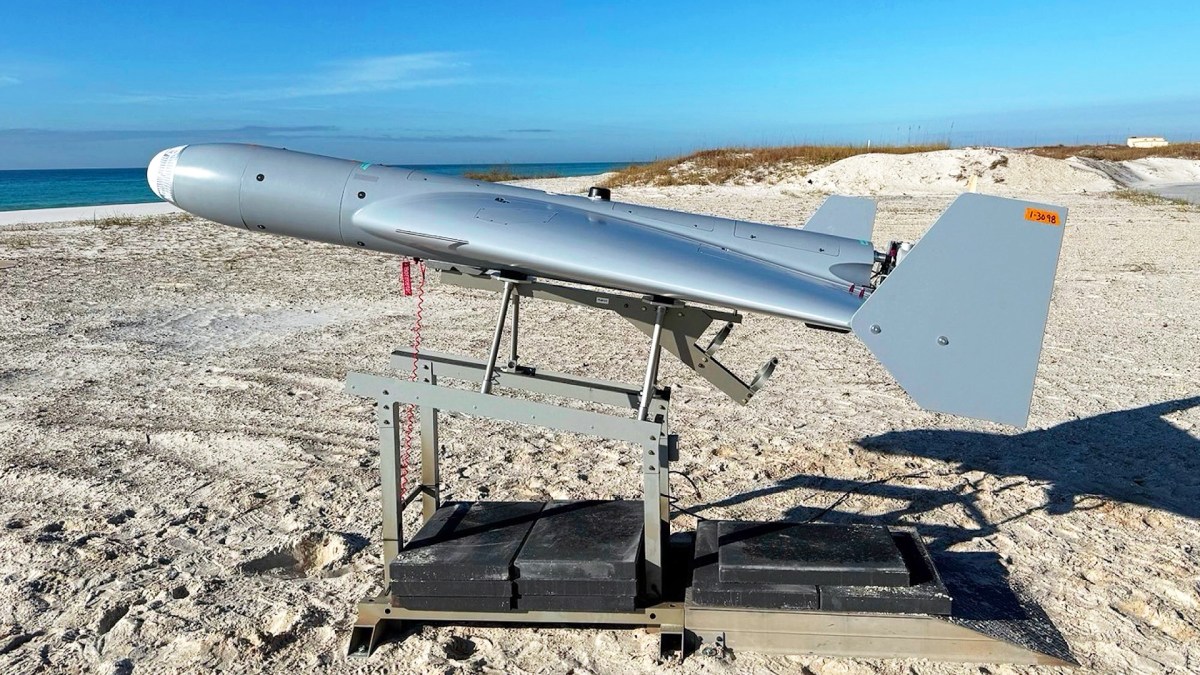
U.S. Military's Shahed-136 Kamikaze Drone Clone Is Getting Hivemind Swarming Capability
Shield AI is providing the software to unlock the combat-proven LUCAS's cooperative swarming potential, which could drastically increase its lethality. Shield AI says AI-guided kamikaze drones mean that a single drone could knock out a target that previously needed 10–20 drones to do the job.www.twz.com
Last edited: