Strategic Hubs: The Distinct Role of Each Base
Each of the three bases brings a different set of capabilities to the table. The investment doesn’t treat them as interchangeable — it sharpens each one’s unique strategic function.
RAF Lakenheath: The Fighter Powerhouse
RAF Lakenheath is the largest US Air Force installation in the UK and home to the 48th Fighter Wing, known as the “Liberty Wing.” It currently fields F-15E Strike Eagles and F-35A Lightning IIs — a combination of proven multi-role strike capability and cutting-edge fifth-generation stealth performance.
Investment here enhances the base’s capacity to sustain high-intensity fighter operations and positions it to support potential future deployments of even more advanced platforms. With F-35 operations already established, Lakenheath sits at the sharp end of NATO’s tactical airpower in Europe. Infrastructure upgrades will improve sortie generation rates, maintenance turnaround times, and the base’s ability to receive and support surge deployments of additional aircraft during a crisis.
RAF Mildenhall: The Enabler of Everything Else
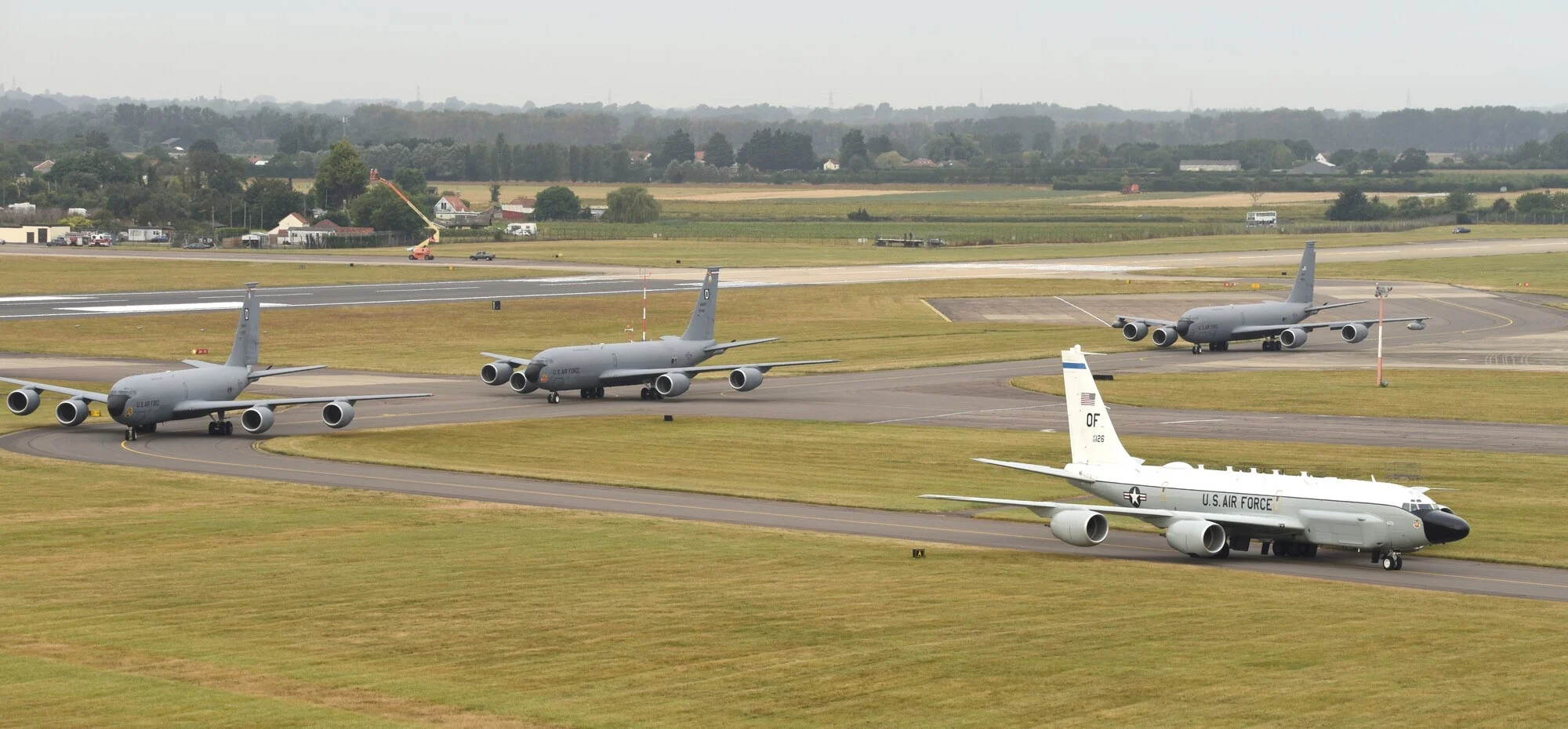
Airpower projection doesn’t happen without fuel and specialized access. RAF Mildenhall, home to the 100th Air Refueling Wing operating KC-135 Stratotankers and the 352nd Special Operations Wing, is the operational backbone that makes extended US air missions across Europe, Africa, and the Middle East possible.
Air refueling transforms the range and endurance of every other aircraft in the US inventory. A B-21 flying from the continental United States to a European target, or a package of F-35s sustaining a combat air patrol, depends on tanker support. Modernizing Mildenhall’s facilities directly amplifies the reach and staying power of every other investment in this package.
RAF Fairford: Europe’s Bomber Base
RAF Fairford operates somewhat differently from the other two — it functions primarily as a forward operating location rather than a permanently assigned unit base. But that description understates its significance. Fairford has hosted rotational deployments of B-52 Stratofortresses, B-1B Lancers, and B-2 Spirit stealth bombers on a regular basis, making it the de facto European hub for US strategic bomber operations.
The investment here targets the specific infrastructure needed to receive and operate the B-21 Raider. That means specialized shelter construction, updated maintenance facilities suited to stealth surfaces, and the command-and-control upgrades that a next-generation bomber demands. Fairford’s geographic position — close enough to the European continent to dramatically reduce mission transit times — makes it indispensable for long-range strike and nuclear deterrence missions.
—
Bolstering European Airpower Projection: Why This Matters Now
The timing of this investment is not coincidental. It arrives against a backdrop of heightened geopolitical tension in Europe and growing calls within NATO for the US to demonstrate its commitment to collective defense with more than words.
The Deterrence Calculus
Deterrence works through capability and credibility. An adversary must believe that an attack will be met with a swift, devastating, and sustained response. Investing $4.2 billion in forward-deployed infrastructure — particularly for nuclear storage and next-generation bomber support — sends an unambiguous message. It demonstrates that the US is not merely present in Europe but is actively deepening its operational roots.
For NATO’s eastern flank nations, which have lived with heightened anxiety since Russia’s 2022 full-scale invasion of Ukraine, the visible commitment represented by these upgrades carries real psychological and strategic weight. It reinforces the fundamental promise of Article 5 with concrete bricks, steel, and specialized infrastructure.
Speed, Reach, and Sustained Operations
Geography matters enormously in military planning. UK-based aircraft can reach Eastern Europe, the Baltic states, the Black Sea region, and even parts of the Middle East far faster than assets flying from the continental United States. The infrastructure upgrades being funded here reduce the time required to generate combat power in a crisis — fewer maintenance delays, better-equipped facilities, and more capable logistics support all translate directly into faster and more sustained operational response.
Interoperability With NATO Allies
Modern coalition warfare demands seamless integration. Upgraded US facilities create better conditions for joint training with Royal Air Force units and other NATO partners, aligning procedures, communications standards, and logistics chains. When a crisis emerges — as history repeatedly demonstrates it will — the partnerships and practiced procedures built during peacetime are what determine outcomes.
—