• Guests may view all public nodes. However, you must be registered to post.

Britain offered Finland and the Baltic states a “nuclear umbrella”

william

Power Poster IV
Donator
Major Contributor
Joined
Mar 3, 2021
British nuclear-powered submarines are to form the backbone of the deterrence system.According to Commander of the Royal Navy Gwyn Jenkins, the new nuclear deterrence would extend to JEF units and would not require activation of Article 5 of NATO.The JEF includes the United Kingdom, Finland, Sweden, Norway, Denmark, Iceland, Estonia, Latvia, Lithuania, and the Netherlands.
  • NEXTA reports that Britain is offering a nuclear umbrella to Finland and Baltic states through the UK-led Joint Expeditionary Force (JEF), relying on nuclear-powered submarines as the core deterrent without needing NATO Article 5 activation.
  • The claim stems directly from statements by Royal Navy's First Sea Lord Gwyn Jenkins during his Finland visit, covered widely by Finnish outlets like Iltalehti and Yle on September 29, 2026, with JEF members planning a formal agreement in Oslo in November.
  • JEF, formed in 2014 and including Nordic, Baltic, and Dutch partners, acts as a rapid-response complement to NATO, aiming to bolster security in Northern Europe, the Baltic Sea, and High North through enhanced deterrence. Grok
 

UK Moves to Extend Nuclear Deterrence Through Joint Expeditionary Force​

The significance of the British proposal is that London would explicitly connect its national nuclear capability to the JEF, a UK-led military grouping built around rapid action in Northern Europe, the Baltic Sea, the North Atlantic and the High North.

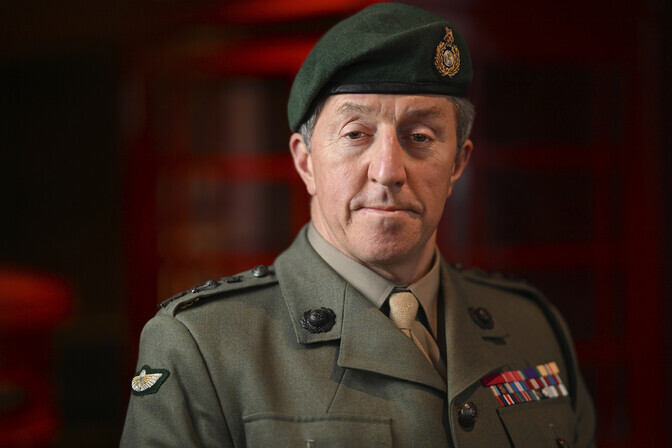
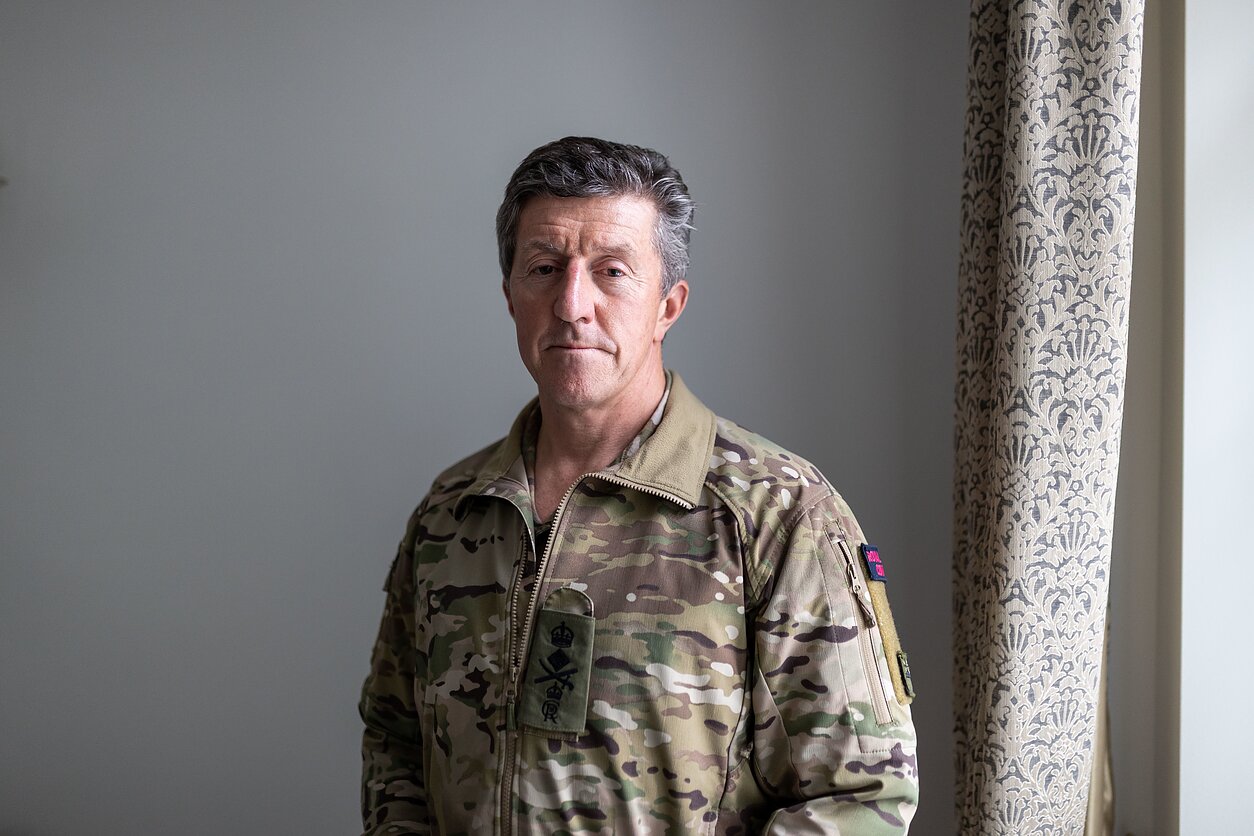
General Sir Gwyn Jenkins, the First Sea Lord, said during a visit to Finland that the country was already covered by Britain’s nuclear deterrent.

“Finland is under the nuclear umbrella. It is guaranteed by our submarines, which are patrolling the Atlantic right now,” Jenkins was quoted as saying.
The comments come as the JEF prepares another stage in its development from a flexible coalition into a more integrated military force. Earlier this year, Jenkins called for JEF members to move towards a permanent formation capable of generating greater combat power and being ready to fight at short notice. The Royal Navy said the aim was to deepen integration among northern European navies in response to growing Russian activity across the region.
According to the Finnish report, JEF members are expected to sign an agreement establishing new combat formations in November. The nuclear commitment would provide a strategic deterrent behind those conventional forces.The proposal concerns the political and strategic circumstances in which Britain’s deterrent is understood to protect its allies. The organisation is increasingly concentrating on permanent readiness, maritime integration and deterrence across the Baltic and North Atlantic rather than occasional multinational exercises.

Britain and France expand Europe’s nuclear architecture​

The British initiative follows a broader change in European nuclear policy.

Britain and France agreed in the Northwood Declaration in July 2025 that their independent nuclear forces could be coordinated and established a Nuclear Steering Group covering nuclear policy, capabilities and operations.

France has subsequently gone further.

President Emmanuel Macron announced a policy of “forward deterrence” in March, allowing participating European countries to join deterrence exercises, contribute conventional forces to nuclear-related operations and potentially host temporary deployments of elements of France’s strategic air forces.
The emerging picture is not a replacement for NATO nuclear deterrence, but several overlapping structures. The British proposal would not provide nuclear protection where none previously existed. It would give Britain’s existing deterrent a defined role within a regional military coalition that is increasingly designed to operate rapidly in the Baltic, North Atlantic and High North.

The details of that commitment — and how directly nuclear deterrence will be incorporated into JEF planning — are expected to become clearer when member states conclude their new military agreement in November.
 
Britain's nuclear shield – This is what it's all about

Heikki Autto, Chairman of the Parliamentary Defence Committee, says that the Defence Committee will receive more information on the new kind of JEF activities tomorrow. In practice, Britain also offers nuclear protection to the Jef countries nationally, i.e. through Jef, not only through NATO's nuclear defense. The protection also applies to Finland, and British nuclear submarines play a key role in it.

Strengthening the third pillar
Iltalehti reported that the Jef countries will sign an agreement on the establishment of combat troops in Oslo in November. Autto is grateful that the matter is progressing quickly in the Jef countries.

From the point of view of strengthening the defence of Finland and all JEF countries, it is noteworthy that the operational combat activities of JEF's new combat troops would not require the activation of NATO's Article 5. It is a complementary force to NATO.

According to Autto, the new opening strengthens the third pillar of Finland's defence. The first pillar is credible national defence, the second is NATO membership. NATO's Article 5 ultimately guarantees the preservation of peace in Europe.

The third pillar is a different kind of multilateral and bilateral defence cooperation and the related tapestry, which Finland has once again begun to strongly strengthen. According to Autto, the third pillar brings added value to national defence and NATO membership.

Jef is a coalition of like-minded countries, with the Baltic Sea, the North Sea and the North Atlantic at the heart of its activities.

"The new proposal that the UK has made brings important concrete things to cooperation," Autto says, stressing that he himself will hear more in the committee tomorrow.

"More for everyone"

According to Autto, the new combat force does not indicate that faith in NATO is wavering, but that it is a matter of strengthening NATO.

"NATO's capabilities have been designed together. Together, we have decided how we will respond to the capability needs that are seen to exist based on the threat assessment. When countries make regional arrangements, either bilaterally or multilaterally, to strengthen their capabilities, they all eventually accumulate into a common capability that creates the strength of the entire alliance. In that sense, I don't see this as taking away from NATO in any way, but more for everyone.

Jef cooperation can be used to create deterrent capabilities so that the area is not attacked. It is also a question of preventing hybrid activities targeting the region.

"The UK's concrete initiative within the framework of Jeff is very important, because Finland is also very dependent on maritime traffic in the Baltic Sea. As a strong navy country with a tradition from the UK, the message that they are committed to keeping shipping in the Baltic Sea going is hugely important.

In an interview with Iltalehti, the British message was made public by the Commander of the British Navy, General Sir Gwyn Jenkins.

The Ministerial Committee on Foreign and Security Policy is working, Parliament is being informed
The JEF countries are the United Kingdom, Finland, Sweden, Norway, Denmark, Iceland, Estonia, Latvia, Lithuania and the Netherlands.

Does the new group of northern regions indicate that the situational picture in southern or western Europe is different from that in the north? Autto emphasises that NATO's threat assessment is shared by all. It highlights the serious and long-term threat posed by Russia to NATO.

"It is probably the case that, for example, international terrorism is perceived as a more concrete threat in the Mediterranean countries than the threat scenario of Russia's imperialist expansionist policy is much more concrete here in the north and on our [European] eastern flank." The countries have different priorities. But it does not in any way diminish the significance of Article 5 and NATO's joint action that countries that see a concrete threat in their own security environment – for example, in our case the threat of Russia – to work together to prepare for it.

The nuclear weapons policy will not change
According to Autto, it is important that Britain strongly signals its own support for Finland and other countries on the eastern flank.

According to Autto, it is also important to ensure that the work of NATO's forward ground forces in Finland (Forward Land Forces, FLF) coincides with the new activities now announced, among other things.

An important element in the new JEF opening is the navy, while in the FLF, according to Autto, it is essential to commit the UK and other partner countries to strengthening the defence of the ground forces in the north.

According to Autto, the general rule that applies to the new Jef activities is that Finland does not seek to deploy nuclear weapons on its soil in peacetime. There will be no change to this policy.

As such, the recently updated Nuclear Energy Act makes it easier than before to enable various kinds of bilateral cooperation, i.e. now, for example, with the British, the implementation of deterrence and the strengthening of Finland's security.

Peace by creating deterrence
According to Autto's understanding, Britain has been active in the new Jef opening.

"But tomorrow we will also hear from the minister what Finland's role has been.

Autto points out that Finland's key objective has been to change NATO's command structure so that Finland was placed under NATO's Norfolk Joint Operations Command with the other Nordic countries, the United Kingdom and North America.

Like many other things in Finland's activities, the latest Jef battle force that has just been announced, emphasises the importance of the Arctic region, which is critical for Finland.

According to Autto's assessment, there are no specific new threat assessments on the basis of the launch of the JEF combat force, but the assessment of Russia's long-term threat to peace in Europe, which was made as the basis for NATO's joint defence plans.

"This is a significant new step.

According to Kaikkonen, Jef may be more agile than NATO in some situations, especially when it comes to the security of Northern Europe.

"Jef's locomotive, the United Kingdom, is a major military actor.

"On the NATO side, Russia's words are taken seriously"
Member of the Defence Committee Mika Kari (Social Democratic Party) considers the news about Jef to be welcome and welcome.

"It will contribute to strengthening Finland's defence and create a concrete deterrent to Russia's toughened military threats," Kari comments.

In Kari's opinion, the advantage of Jef's structure is that its countries are, in principle, militarily capable European countries.

"In addition to nuclear weapons, the United Kingdom in particular has capabilities on land, at sea and in the air, all the way to submarines, as well as a proven ability to move its troops in crisis areas. We have also been training with the Jef countries for years, so we have also tested the readiness side and capabilities for a long time," Kari says.

"Jef's exercise activities have been aimed at strengthening the defenses, but the fact that the announcement of the new combat troops took place after Russia's tougher speeches in recent days raises the question of whether the timing of the exit is due to a partial response to these words," he continues.

"A few weeks ago, France's nuclear weapons initiative and now this news show that NATO takes Russia's words seriously," Kari adds.

This is the Embassy's policy

The day after the publication of the Iltalehti article, in which the commander of the British Navy was interviewed, the British Embassy contacted them to emphasize that there are no changes in Britain's nuclear weapons policy.

"The Navy Commander did not state that the UK would provide a separate nuclear safeguards guarantee through the JEF, nor did he state that the UK nuclear forces are assigned to the JEF. On the contrary, he explicitly based his response on the fact that the JEF countries are members of NATO and that the United Kingdom's nuclear deterrence is directed at NATO," the embassy's message states, referring to an interview with Iltalehti.

The article was edited on 30 September at 13:20: Comments from the British Embassy in Finland have been added.


Royal Navy chief: JEF to create new combat units and get UK nuclear deterrence​

The Joint Expeditionary Force (JEF), established to strengthen the security of 10 countries in the Nordic and Baltic region, will form new combat units centered on British military capabilities and nuclear deterrence, Royal Navy chief Gwyn Jenkins said.
The Joint Expeditionary Force (JEF), a U.K.-led defense cooperation and rapid-response framework for Northern European countries, which also includes the Netherlands, Finland, Sweden, Norway, Denmark, Iceland, Estonia, Latvia and Lithuania, will sign an agreement in Oslo in November to establish new combat units, Gen. Gwyn Jenkins of the Royal Marines said in an interview with Finnish newspaper Iltalehti.


According to Jenkins, deploying JEF combat units would not necessarily require NATO's Article 5 to be invoked. The JEF complements NATO and allows its member states to respond rapidly to situations in which a JEF country comes under threat. He said wartime defense plans have already been drawn up for the new units, which should be capable of entering combat immediately if necessary. The plans cover operations by JEF countries' navies, their own national defense requirements and support for NATO's wartime plans.

The navies of JEF countries would form the core of the new units, although their composition and capabilities would depend on the specific mission. Traditional warships and submarines would be supported by military aircraft, helicopters, marines and special forces. Uncrewed systems, including aerial and maritime drones and other autonomous technologies, would also be used extensively. Jenkins described the approach as a hybrid fleet. Britain's state-of-the-art F-35 stealth fighters based aboard its aircraft carriers would be an important part of the JEF's capabilities.
The backbone of the force's military deterrence would be Britain's nuclear weapons, carried aboard British submarines patrolling the Atlantic Ocean. Jenkins said the Royal Navy maintains constant readiness to provide nuclear protection for the Nordic region as well. He stressed that Britain's nuclear deterrent is not only part of NATO's collective defense but also provides the U.K. with a sovereign defense capability.

According to Iltalehti, Britain's nuclear deterrent would in the future also extend through the JEF to all of its member countries, rather than solely through NATO's nuclear defense framework. Jenkins said this should also send a direct message to Moscow.
The agreement to be signed in Oslo in November is expected to give these plans a concrete organizational structure. It should provide further details on how the JEF's collective defense in the Baltic region, the Nordic countries, the North Atlantic and the Arctic will be strengthened.

Finnish expert: This is a big deal

Finnish security expert Henri Vanhanen commented on the announcement that JEF units would be established, saying the move is far more significant for Finland's security than may currently be understood.

"This is not just about new combat units or British nuclear weapons. A framework is now being created in Northern Europe that would allow Britain and a group of Finland's closest partners to take rapid military action in a critical situation, even without NATO. This is a major change," he wrote on social media.
Vanhanen explained that if Russia were ever to seek to test the West, it would benefit from creating as ambiguous a situation as possible — one in which NATO's 32 member states would have to consider exactly what was happening, whether it constituted an attack and how to respond. The JEF, however, makes such a strategy more difficult.

"This would not even require a joint decision by all 10 JEF countries. Britain could, for example, act together with Finland, Sweden and other willing countries. Each country decides for itself how to use its forces," he noted.

With greater military capabilities now set to underpin the framework through the creation of new combat units and the strengthening of capabilities, particularly at sea, this is highly significant for Finland, Vanhanen wrote.

"We depend on the Baltic Sea and connections to the West. Britain, meanwhile, is one of Europe's strongest naval powers, a nuclear-armed state and a country capable of deploying truly significant military force here," the Finnish expert said. "So Britain is not simply promising to support Northern Europe. It is already building, in peacetime, a system through which it could come here to fight if necessary. The more of this that is prepared in advance, the less room there will be for uncertainty when a crisis occurs."

Vanhanen noted that while NATO is the foundation of Finland's defense, it does not make sense to put all its eggs in one basket. The JEF means that, if necessary, the U.K. and other willing countries can also act quickly by reaching agreements among themselves. Russia therefore can no longer count on hesitation within NATO buying it additional time.

"For this reason, I currently consider strengthening the JEF to be one of the most important pillars of Finland's defense," he concluded.
 

First Sea Lord Strengthens Northern European Maritime Partnerships Ahead of Major Allied Security Forums​

• First Sea Lord visits Lithuania, Latvia, Finland and Estonia to strengthen maritime cooperation with Joint Expeditionary Force (JEF) partners and reinforce collective security across Northern Europe.

• Visit demonstrates UK leadership within the UK-led JEF, enhancing interoperability, deterrence and resilience across the Baltic, High North and North Atlantic in support of NATO.

• Engagements will build momentum towards the Atlantic Future Forum and International Sea Power Conference on HMS Prince of Wales, bringing together defence leaders, industry and policymakers to discuss the future of Euro-Atlantic security
 
I worry about Russian miscalculation in Baltics – interview with Britain’s top general
Britain’s top navy general Gwyn Jenkins visited Lithuania and the Baltic states last week as the UK continues to build the 10-nation Joint Expeditionary Force (JEF) as a coalition of the willing that would speed up decision-making in case of a Russian attack.
In an exclusive interview with LRT.lt, General Jenkins spoke about the importance of the Klaipėda seaport, the British-led JEF as a coalition of the willing, and the growing risk of Russia “doing something stupid” in the Baltics.

You mentioned the word alarmism. I'm seeing a lot of that now, especially in international media. From your perspective, are there any signs we're seeing that would require more vigilance than before?

I'm a military strategist by profession. Our job is to be prepared, and that means we take all our threats, all the threats that we see in front of us, very seriously, but that isn't an excuse for making the Russians out, out to be more than they are.

[...] Russia is bleeding in Ukraine. It has made a massive strategic mistake in picking an egregious illegal war with a sovereign state on European soil that we are all supporting.

While the war goes on, I don't believe Russia has the capacity to take the more alarmist courses of action that some people talk about. It recognises that we are a phenomenal force if it was stupid enough to pick an Article 5-type scenario.

But the concerns are of something happening below that threshold?

If I have a concern about Russia, it is that I don't think they're very professional. I think their ability to miscalculate is huge. When I see it in the Baltic, and I see it in the North Sea, and I see it around the British Isles and elsewhere, unprofessional behaviour has the potential to escalate certain scenarios.

Our management of that and our ability to contain something– if they do something silly, stupid, illegal, egregious – that is where the concerns lie. And that's not the same as a pre-planned massive invasion of Europe.

This threat is very serious. I am worried and concerned about Russian behaviour and what they might do either during the war or once the war in Ukraine is finished [and] what happens to the Russian state after that point.
 
It will be interesting to see what is actually signed in November. Sometimes what the military wants to do and what the politicians will allow can be quite different.
 
Back
Top Bottom