• Guests may view all public nodes. However, you must be registered to post.

California's so-called 'draconian' fast-food bill is now law

william

Power Poster IV
Donator
Major Contributor
Joined
Mar 3, 2021
Sad that a kid flipping burgers will make more than a Marine at Camp Pendelton training to storm the beaches halfway around the world. :(

Ther goes the price of a Big Mac! :mad:

In addition to the minimum wage increase for fast-food workers, which comes into effect April 1, 2024, the bill also establishes a council that can approve further wage increases in the future.

However, the NOA says the law would introduce costs that “simply cannot be absorbed by the current business model.”

The group claims that 95% of the 1,300 McDonald’s restaurants in California are locally owned and operated by small business owners.

“The new AB 1228 legislation has been voted into law and will result in a devastating financial blow to California McDonald’s franchisees at a projected annual cost of $250,000 per McDonald’s restaurant,” the NOA said in a memo obtained by Fox Business

The bill’s landmark change is a minimum wage hike to $20 per hour, almost $5 higher than the Golden State’s minimum wage of $15.50.

It would also see the establishment of a Fast Food Council to set wages and make recommendations for working conditions. The council has the power to increase the new minimum wage each year through 2029 up to 3.5% or the average change in the Consumer Price Index for urban wage earners, whichever is lower.

A previous version of this article indicated that AB 1228, when passed by the California Senate, would have made fast-food franchisors jointly liable if franchisees committed labor violations. This was amended out of the bill. Correction:

In exchange for the dropped attempt to make corporations liable for the misdeeds of franchisees, industry leaders agreed to pull a voter initiative that would have triggered a referendum related to worker wages in 2024, giving way to the wage increases included in the bill.
 

McDonald's Faces Destruction of Its Business Model Under New Labor Rule​


McDonald's said a revision to employment law being considered by the National Labor Relations Board (NLRB) would destroy the franchise model it has operated on for decades.

The independent federal agency is considering broadening the definition of what counts as a "joint employer," making it easier to hold umbrella corporations responsible in labor disputes and negotiations with trade unions.

The proposed revision was announced last September, and in July the NLRB said it was expecting to issue the final version by August. Financial news outlet Barron's reported on Monday that the agency would not comment on the timing of the release, though industry insiders expected it to be soon.

While the proposal would make it easier for labor unions to hold umbrella companies accountable for labor law violations such as union-busting, instead of individual franchisees, McDonald's said it would undermine a system that "has improved the lives of McDonald's franchisees, the employees who work in their restaurants, and the local communities they serve."

In a December letter to NLRB, Angela Steele, the company's general counsel, wrote that "while McDonald's provides access to the world's premier restaurant operating system, local small business owners manage their restaurants and bear responsibility for their own employees.

"While declaring a franchisor and its franchisees to be joint employers might reduce some obstacles to unionization across large franchise systems, it would have the devastating consequence of destroying the franchise business model that powers the U.S. economy."
 
McDonalds workers in Denmark earn USD 22 per hour + have 6 weeks annual vacation and a range of other benefits that American workers could only dream of. Sick days, maternity leave anyone?

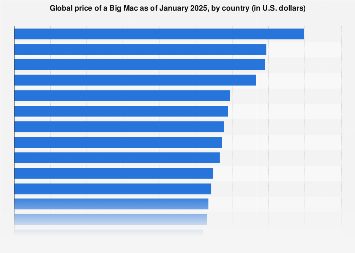
Big Macs are cheaper in Denmark than in the USA


Economy of Denmark​


The economy of Denmark is dominated by the service sector with 80% of all jobs, That's almost the whole country. Do Americans want over 300 million people working in the service industry. Apparently We can all cater to the elites! at the top.

The net government debt is very close to zero, amounting to 1.3% of GDP in 2017. In the US it is over 30 trillion.

Average per capita income is high in an international context. According to the World Bank, gross national income per capita was the tenth-highest in the world at $55,220 in 2017. Correcting for purchasing power, income was Int$52,390 or 16th-highest among the 187 countries. Most people on the US are living paycheck to paycheck because of the lack of purchasing power.

During the last three decades household saving rates in Denmark have increased considerably. This is to a large extent caused by two major institutional changes: A series of tax reforms from 1987 to 2009 considerably reduced the effective subsidization of private debt implicit in the rules for tax deductions of household interest payments. Secondly, compulsory funded pension schemes became normal for most employees from the 1990s.] Over the years, the wealth of the Danish pension funds have accumulated so that in 2016 it constituted twice the size of Denmark's GDP. Politicians on the left on the US like to raise taxes on everything and allot of our pension funds are underwater.

The Danish tax-to-GDP-ratio of 46% was the second-highest among all OECD countries, second only to France. The OECD average was 34.2%. The tax structure of Denmark (the relative weight of different taxes) also differs from the OECD average, as the Danish tax system in 2015 was characterized by substantially higher revenues from taxes on personal income, whereas on the other hand, no revenues at all derive from social security contributions. A lower proportion of revenues in Denmark derive from taxes on corporate income and gains and property taxes than in OECD generally, whereas the proportion deriving from payroll taxes, VAT, and other taxes on goods and services correspond to the OECD average.

 
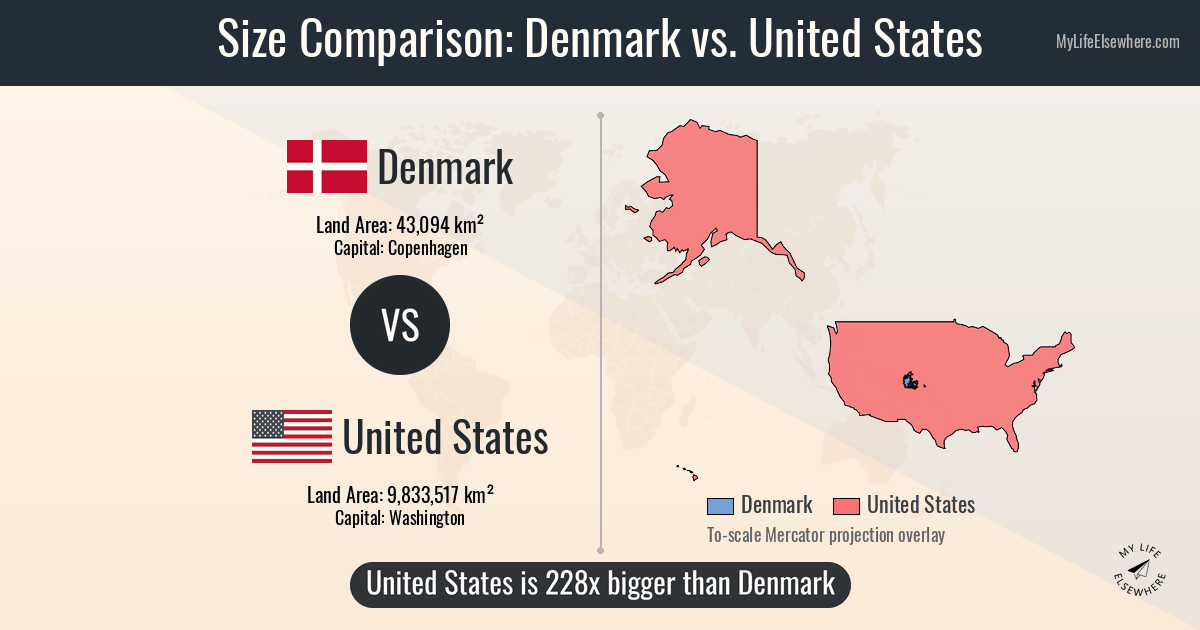
This might have something to do with it.

Denmark is about 228 times smaller than United States.​


Ah, I didn't realise that only small countries are allowed to treat their workers properly. Whilst I fully undesratnd that a larger workforce means that supply is more likely to meet, or even outstrip, demand, I don't think that is an excuse for American companies, in many industries not just F&B, to treat staff poorly.
 
I think the comparison of Denmark to the US is like comparing apples to oranges. I do agree that Denmark is a very good place to live though.
 
Ah, I didn't realise that only small countries are allowed to treat their workers properly. Whilst I fully undesratnd that a larger workforce means that supply is more likely to meet, or even outstrip, demand, I don't think that is an excuse for American companies, in many industries not just F&B, to treat staff poorly.

I agree. I myself am a union man and live quite well on my pension, social security, investments and by being conservative. I do feel that raising the slandered of living for working people is not by raising the mandatory minimum wage on business but by increasing the purchasing power of the dollar. I did run a business for a number of years, so I have seen both sides of it.
 
Back
Top Bottom