• Guests may view all public nodes. However, you must be registered to post.

Hungary, Todays Letter...

Who is Péter Magyar, the man leading the polls as Hungary prepares for election?
Now Magyar, 45, is the driving force behind what could be another momentous political change in Hungary: the ousting of Orbán, whose 16 years in power has transformed the country into a “petri dish for illiberalism”.

Few could have predicted the meteoric rise of Magyar and his Tisza party. “He has built an opposition movement at amazing speed,” said Gábor Győri of Policy Solutions, a Budapest-based political research institute. “Never, since the history of this post-transition Hungary, have we seen a party rise this quickly.”
 
  • Like
Reactions: Torch
Rank Country Total Value Index Classification
1 Denmark 0.958 Working Democracy
2 Norway 0.956 Working Democracy
3 Finland 0.946 Working Democracy
4 Sweden 0.946 Working Democracy
5 Germany 0.944 Working Democracy
6 Switzerland 0.934 Working Democracy
7 Netherlands 0.93 Working Democracy
8 New Zealand 0.928 Working Democracy
9 Belgium 0.925 Working Democracy
10 Costa Rica 0.914 Working Democracy
11 Spain 0.912 Working Democracy
12 Luxembourg 0.905 Working Democracy
13 Australia 0.904 Working Democracy
14 Estonia 0.903 Working Democracy
15 Iceland 0.899 Working Democracy
16 Ireland 0.898 Working Democracy
17 United Kingdom 0.892 Working Democracy
18 Austria 0.89 Working Democracy
19 France 0.889 Working Democracy
20 South Korea 0.883 Working Democracy
21 Lithuania 0.879 Working Democracy
22 Italy 0.871 Working Democracy
23 Portugal 0.864 Working Democracy
24 Canada 0.86 Working Democracy
25 Japan 0.857 Working Democracy
26 Taiwan 0.847 Working Democracy
27 Uruguay 0.847 Deficient Democracy
28 Cyprus 0.846 Working Democracy
29 Chile 0.84 Working Democracy
30 Slovakia 0.836 Working Democracy
31 Greece 0.834 Working Democracy
32 Czech Republic 0.834 Working Democracy
33 Latvia 0.83 Working Democracy
34 Barbados 0.83 Working Democracy
35 Israel 0.821 Working Democracy
36 United States of America 0.811 Deficient Democracy
37 Cape Verde 0.792 Deficient Democracy
38 Jamaica 0.787 Deficient Democracy
39 Trinidad and Tobago 0.784 Deficient Democracy
40 Slovenia 0.782 Deficient Democracy
41 Tunisia 0.779 Deficient Democracy
42 Malta 0.774 Deficient Democracy
43 Vanuatu 0.769 Deficient Democracy
44 Argentina 0.763 Deficient Democracy
45 Croatia 0.763 Deficient Democracy
46 Romania 0.731 Deficient Democracy
47 South Africa 0.72 Deficient Democracy
48 Botswana 0.719 Deficient Democracy
49 Seychelles 0.716 Deficient Democracy
50 Peru 0.716 Deficient Democracy

 
Based on the Economist Intelligence Unit's (EIU) 2024 Democracy Index, Norway is consistently ranked the most democratic country, while Nordic nations, New Zealand, and Switzerland dominate the top positions, often dubbed "full democracies". The least democratic countries are typically authoritarian regimes, with Afghanistan, Myanmar, and North Korea ranking the lowest.
Economist Intelligence Unit
+4
Top Ranked (Full Democracies):
1. Norway: Ranks consistently top for civil liberties and electoral processes.
2. New Zealand: Often ranks high, particularly for political participation.
3. Sweden/Finland/Iceland: Other Nordic nations frequently fill the top five.
Other high performers: Denmark, Switzerland, Ireland, Canada.
Civil Liberties Union for Europe
+4
Middle/Flawed Democracies:
United States: Classified as a "flawed democracy".
Japan & South Korea: Often fluctuate between full and flawed democratic status.
France: Another democracy sometimes categorized as flawed depending on political turbulence.
Visual Capitalist
Visual Capitalist
+2
Lowest Ranked (Authoritarian/Hybrid Regimes):
North Korea: Consistently among the lowest scores globally for civil liberties.
Myanmar: Extremely low rankings.
Afghanistan: Ranked at the bottom following the Taliban takeover.
Other low performers: Syria, Turkmenistan, Central African Republic.
Statista
Statista
+2
Key Trends:
The overall global average democracy score has declined in recent years, pointing to a global democratic recession.
Western Europe is the top-performing region.
The Democracy Matrix and EIU are standard, frequently cited, and recognized metrics for assessing these rankings.
 
Another chunk of evidence, based on all this what do you ferl a logical question is? And its nothing to do with Epstein🤔

More than one-third (39.2%) of the world population live under authoritarian rule. Sixty countries are now classified as “authoritarian regimes”, an increase of one compared with the 2023 index, and an increase of eight from a decade ago in 2014.
The categories that have recorded the biggest deterioration since 2008 are civil liberties (-1.00 on a 0-10 scale) and electoral process and pluralism (-0.66), however the global average score for political participation improved by 0.74 between 2008 and 2024.
Western Europe has the highest index score of any region, at 8.38, and was the only one to improve its overall score in 2024. The United Kingdom improved its score, moving up the rankings from 18th in 2023 to 17th.
The US score remained unchanged in 2024 and the US continues to be classified as a “flawed democracy,” ranked 28th. It remains to be seen if historical checks and balances will remain in force and serve to improve or worsen the US’s ranking in 2025.
The Nordic countries (Norway, Iceland, Sweden, Finland and Denmark) continue to dominate the Democracy Index rankings, taking five of the top seven spots, with New Zealand claiming second place and Switzerland moving up to fifth.
France’s score fell just below the 8.00 threshold to qualify as a “full democracy” because of a decline in its score for functioning of government. Therefore, France was downgraded from a ‘full democracy’ to a “flawed democracy” in 2024.

 
When you support Russia and China creating the weapons to shoot your sons and daughters funded by your hardworking dollars, then by all means snuggle up to Orban, and other authoritarian regimes like his,
If fact , if you dont like your freedom, well, you know the saying. ………
1776 has taught alot of people nothing, !!
 
What was interesting about the Democracy Matrix is that they do list their criteria for scoring, but don't say why a particular country was promoted or penalised.

The United Kingdom is given a score of 0.892, but they don't say why it got that score.

Might as well have pulled it out of a hat.
 
What was interesting about the Democracy Matrix is that they do list their criteria for scoring, but don't say why a particular country was promoted or penalised.

The United Kingdom is given a score of 0.892, but they don't say why it got that score.

Might as well have pulled it out of a hat.
Their scoring system is pretty elaboarte, i am sure given another i could drive it all out for a great debste,,,,🤔
i was surprised where Canada sat, but in the totality sort of makes sense

in the end of a Lunar splashdown!!! in the importance ratings levels its higher than geopolitics🤔😂😂😂😂🚀🚀🚀
 
Lets play lets compare?

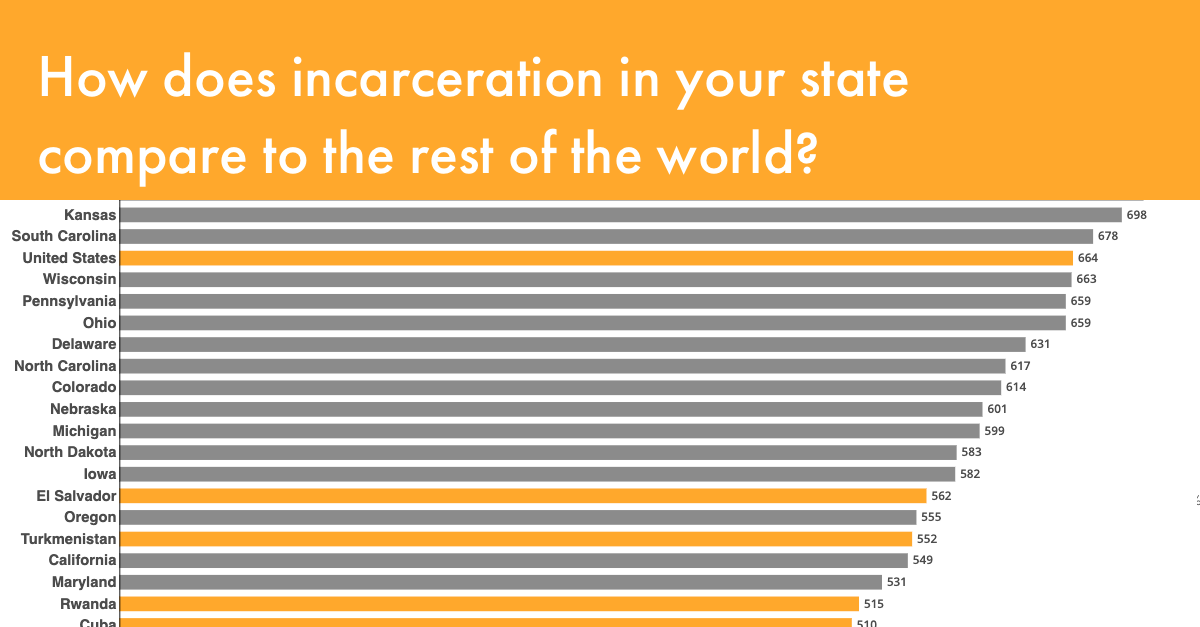
The United States and Hungary differ significantly in crime and incarceration rates, with the U.S. having higher rates of violent crime and a much larger prison population, while Hungary operates within a European context of lower overall crime but higher imprisonment within the EU.
Incarceration Rates
United States: The U.S. has one of the highest incarceration rates in the world, with roughly 2.02 million prisoners or roughly 715 per 100,000 people (as of 2008 data, still leading global rates in later reports).
Hungary: Hungary has one of the highest incarceration rates in the EU, at approximately 200 prisoners per 100,000 people in 2022 and 187 in 2023.
Comparison: The U.S. incarceration rate is roughly four times higher per capita than Hungary's.
Sentence Lengths: American prison sentences are often exponentially longer than those in Europe, with U.S. correctional systems spending less on rehabilitation compared to European counterparts.
Prison Policy Initiative
+4
Crime Rates
Violent Crime: The U.S. reports significantly higher violent crime rates. Murder rates in the U.S. are roughly 3 times higher than in Hungary.
Gun Crime: Guns per 100 residents are roughly 16 times higher in the U.S. (88.8) compared to Hungary (5.5).
Rape and Assault: The U.S. recorded significantly higher rates of rapes (84,767 in reported statistics) compared to Hungary (246), and higher rates of assaults and robbery.
Safety: While both countries experience petty crime in major cities, Hungary is generally considered safe, with over 55% of residents reporting feeling safe walking alone at night, compared to 41.8% in the U.S..
Drug Offenses: Hungary has seen high rates of drug offences (4,786 per 100,000 in one report), but lower overall illicit drug use compared to the U.S., where cannabis use is 6 times higher.
Criminal Justice Trends
Release Policies: Hungary has faced criticism for releasing convicted smugglers to manage prison overcrowding due to EU budgetary pressures, which analysts say harms deterrence.
Juvenile Justice: Hungary’s age of criminal responsibility starts at 12 for serious crimes, while many U.S. states rely on common law, often with a minimum age of 7.
The Organized Crime Index
+1
In summary, the United States experiences substantially higher levels of violent and gun-related crime and maintains a far more punitive and extensive incarceration system than Hungary.
 
How and Why Western Europe Avoided Mass Incarceration

Mass incarceration” is not and has not been a Western European phenomenon despite, with minor differences between countries, a doubling or tripling in homicide and other violent crime rates between the early 1970s and the 1990s. Property crime increases were larger. Comparable increases in the United States, it was commonly said, inevitably…..

 
How Viktor Orbán’s Hungary Eroded the Rule of Law and Free Markets
Many on the right see Viktor Orbán’s Hungary as a model. In fact, it is a cautionary tale of unrestrained executive power and crony capitalism

Some US conservatives see Prime Minister Viktor Orbán’s Hungary as a model for America’s future. 👍🏻

👉In reality, Orbán’s crude majoritarianism has undermined the rule of law and media freedom in Hungary to take control of the economy and funnel resources to loyal oligarchs.

The dismantling of institutional constraints on state power has gone further than in other modern democracies,
In the Varieties of Democracy’s (V‑Dem) Liberal Democracy Index, which includes rule of law, checks and balances, and civil liberties, Hungary halved its performance from 0.65 to 0.32 between 2010 and 2024. (Scores closer to 1 are more free, and scores closer to 0 are less free.) This makes it the least free country in the European Union, where the average is above 0.7. Hungary’s rating is similar to Nigeria and Kuwait. According to V‑Dem, the deterioration in liberty makes Hungary the world’s leading “autocratizer” in terms of magnitude of change.13

Similarly, Hungary has deteriorated markedly in the Cato Institute and Fraser Institute’s Human Freedom Index, which measures both personal and economic freedoms. In 2010, Hungary was the 31st-freest country on the planet. By 2023, it had fallen to 67th, last among EU countries and coming after African countries including Namibia and Botswana (Figure 1).14
 
As of 2026, Hungary's rights and freedoms have deteriorated to the point where it is classified as a "partly free" and a "hybrid regime of electoral autocracy," making it the lowest-ranked European Union member state on several international democracy indices. While Hungary is often called "Europe's most Moscow-friendly leader", comparisons to Russia reveal that while Viktor Orbán mimics Russian autocratic techniques—such as media centralization and NGO restriction—Hungary remains constrained by its membership in the EU and NATO, keeping it distinct from Russia’s fully consolidated autocracy.
European Parliament
European Parliament
+4
Rights and Freedoms on the World Stage (2025–2026)
Hungary has seen a significant erosion of democracy and the rule of law, with its Liberal Democracy Index score halving between 2010 and 2024.
Cato Institute
Cato Institute
Judiciary and Rule of Law: The government has used emergency decrees to block court cases, including those challenging municipal taxes. The European Commission has continued to express concerns about judicial independence and the refusal to follow European Court of Human Rights rulings.
Media Freedom: Hungary's rank in Reporters Without Borders’ World Press Freedom Index dropped to 68th, with the government controlling or influencing much of the media landscape. The European Commission launched infringement proceedings against Hungary for failing to comply with the European Media Freedom Act.
Civil Society: The "Sovereignty Protection Office" launched investigations into independent media (e.g., Átlátszó) and civil organizations (e.g., Transparency International) for receiving foreign funding. New, stricter legislation in 2025 was designed to stifle opposition voices before the 2026 elections.
LGBTQ+ and Minority Rights: Following constitutional amendments and laws in 2025, public LGBTQ+ events, including Pride, face severe restrictions, and legal gender recognition has been effectively banned.
Freedom House
Freedom House
+7
Comparison to Russia
Orbán has praised Russia, China, and Turkey as models for creating a "non-liberal" state. Similarities have grown, yet fundamental differences remain.
The George Washington University
Similarities:
Media and Information Control: Like Russia, Hungary has concentrated media ownership in the hands of loyalists, creating a dominant pro-government narrative.
Autocratic Tactics: The Hungarian government uses legal and economic measures to pressure independent journalists and civil society, similar to Russia's crackdown on NGOs.
Pro-Russian Orientation: Hungary is the only EU country that increased its energy supply from Russia after the 2022 invasion of Ukraine and frequently blocks EU military aid to Ukraine.
NYU Law School
NYU Law School
+3
Differences:
EU and NATO Constraints: Hungary is an EU and NATO member. While it acts as a "thorn in the side" of the EU, it is still subject to the European Court of Justice and EU budgetary pressure, which has led to frozen funds and fines.
Electoral System: While the playing field is heavily slanted, opposition parties in Hungary can still campaign, whereas in Russia, they are systematically eliminated or imprisoned.
Intensity of Repression: While Hungarian authorities use "soft-authoritarianism" to intimidate, they do not generally use the same level of violent repression, political assassination, or mass imprisonment of political opponents that defines the Putin regime.
European Parliament
European Parliament
+4
2026 Election Context
As of April 2026, Hungary faces a consequential election where the ruling Fidesz party faces a significant challenge from a new opposition movement (TISZA party) led by Péter Magyar. The election is described as a showdown between continuing down an authoritarian path similar to Russia or attempting to move back towards the European democratic mainstream
 
It seems the more a leader is a dumbass , the easier it is to find evidence to substantiate it🤔

Do we as smart American freedom loving people really want for us to be associated with authoritarian leaders . Russian is an easy language to learn, So is Chinese, 😂👍🏻

Ask those from 1776, ? Ask those who fought and died for for your freedom,

if we can have freedom for 1 year,
Then we could have 10!
Sang out the preacher, so said the sailor, amen!
 
Whats fun! Answer who better to worst,
Please read you might be very surprised
Again who’s funding and where is the data

The Democracy Matrix is solely funded by the German research foundation.

Which has had ties to Bejing for 25 years.


The Democracy Index is based on expert assessments. Of which who the experts are for individual nations is hidden.
From a foundation the has a established ties to a Chinese institutions.

I’m comfortable with the assessments of this product
 
Back
Top Bottom