• Guests may view all public nodes. However, you must be registered to post.

NPP STATUES: Bulgaria - Hungary - France - Slovenia - Romania | NPP's Shutdown or Reduced Output Because of Critically Low Water Intake Levels

NuclearID

Intelligence Specialist
Donator
Member of the Year
Joined
Feb 6, 2024
Location
Southern Florida
TWITTER
NuclearID68
🇷🇴☢️
Romania’s Nuclearelectrica disconnected Cernavoda Unit 1 from the grid after severe drought pushed the Danube to an unprecedentedly low level, removing approximately 650 MW of generation.

The controlled shutdown was undertaken under severe drought procedures.

No impact to nuclear safety, personnel or the environment was reported. Unit 2 may also require intervention if river conditions continue deteriorating.

🔗⤵️
 
🇷🇴☢️📣
UDPATE: Cernavoda Unit 2 was disconnected from Romania’s grid after unprecedentedly low Danube water levels reached operational limits. Unit 1 has been offline for the same reason since July 28th.

With both reactors unavailable, approximately 1.3 GWe of capacity, normally supplying around one fifth of Romania’s electricity, is offline.

NOTE--➡️ The shutdowns are preventive, with no reported impact on nuclear safety, personnel or the environment.

🔗⤵️
 
🇭🇺☢️💧
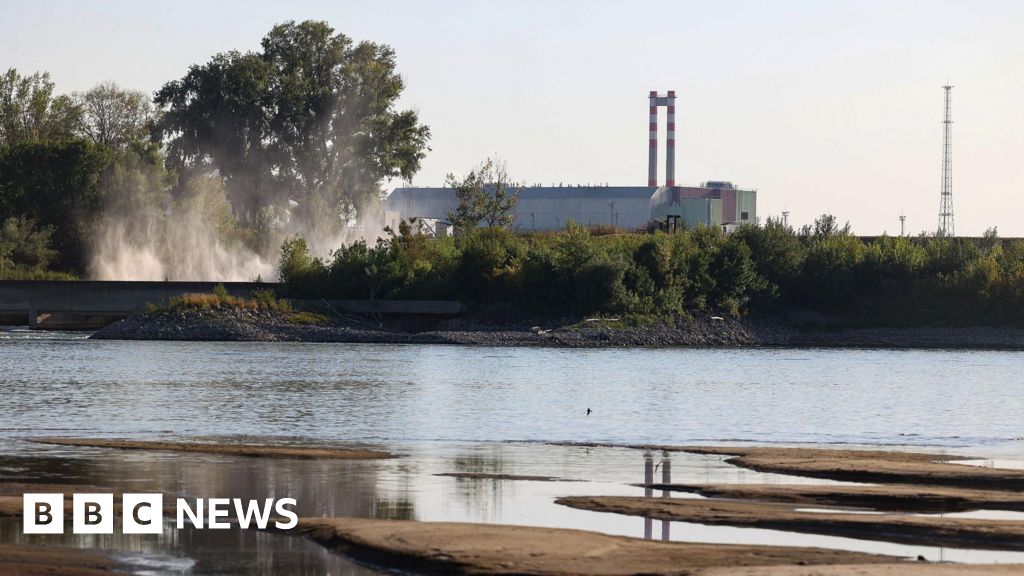
Hungary’s Paks nuclear plant fell to approximately 480 MW, down from nearly 2,000 MW under normal four unit operation, after MVM stopped the remaining turbine generator associated with Unit 1 as Danube water levels continued falling.

Paks ordinarily supplies nearly half of Hungary’s electricity. A complete shutdown could occur over the weekend, while authorities prepare voluntary and potentially mandatory electricity reductions for major industrial consumers.

NOTE--➡️No nuclear safety or environmental event has been reported.

🔗⤵️

@DEFCON Warning System @RiffRaff @Irag8er @Torch @Sentry
 
🇭🇺☢️💧
UPDATE: Hungary’s Paks nuclear plant fell to approximately 233 MW, around 12% of its normal output, after Unit 4 entered shutdown amid record low Danube water levels.

Units 1, 3 and 4 are offline, leaving only Unit 2 connected at roughly half capacity. The government says the remaining unit could also be shut down today if river conditions continue deteriorating.

NOTE---➡️ No impact on nuclear safety or the environment has been reported.

🔗⤵️

@DEFCON Warning System @RiffRaff @Irag8er @Torch @Sentry
 
  • Like
Reactions: Torch
🇷🇴🪖🧨☢️
UPDATE: Romanian military divers used 180 kilograms of explosives on August 3RD to dislodge the Parjoaia rock formation near the Bala branch of the Danube. An initial underwater inspection indicated approximately four meters of rock had been removed.

The intervention is intended to redirect water toward the Old Danube and Cernavoda nuclear power plant. Debris removal, possible barge placement and dredging remain outstanding; the resulting increase in water flow has not yet been established.


🔗⤵️

@DEFCON Warning System @RiffRaff @Irag8er @Torch @Sentry
 
  • Like
Reactions: Torch
🇭🇺☢️💧
The remaining turbine at Hungary’s Paks Nuclear Power Plant is operating at approximately 240 MW, leaving the 2 GW facility at just over 10% of capacity.

Prime Minister Péter Magyar said Paks came within a few millimetres of the water level threshold for a full shutdown at approximately 01:30 local time. The Danube’s decline then stopped, with water levels rising 1.5 centimetres by morning.

The reprieve remains fragile, with a full shutdown still possible if river levels resume falling. Voluntary demand reductions by households & more than 300 companies remain in effect.

🔗⤵️
 
🇷🇴☢️
UPDATE: Romanian authorities prepared four rock loaded barges for controlled sinking in the Bala branch to create an artificial submerged sill and redirect more Danube water toward the Old Danube channel & Cernavoda Nuclear Power Plant.

The intervention remains delayed due to strong currents that could endanger personnel or complicate the barges’ placement. Dredging is continuing separately.

Danube inflow has fallen to 1,400 cubic metres per second, matching the historic 1985 minimum, and is forecast to remain broadly stationary through August 12. No hydraulic resolution or guaranteed extension of Unit 2 operations has been established.

🔗⤵️
 
🇸🇮☢️💧
Krsko Nuclear Power Plant began a controlled reduction toward 80% reactor power due to persistent heat and low Sava River flow threatening compliance with environmental temperature limits.

The plant’s environmental consent limits the daily average downstream river temperature to 28C and the average daily increase attributable to Krsko to 3C.

Operator NEK said the temporary reduction is environmental and not related to a reactor fault or nuclear safety issue. Further reductions remain possible if conditions deteriorate.

🔗⤵️
 
🇷🇴☢️💧
UPDATE: Romanian authorities completed the controlled sinking of all four rock loaded barges in the Bala branch, forming underwater sills intended to redirect additional Danube water toward the Old Danube channel and Cernavoda Nuclear Power Plant.

The hydraulic benefit has not yet been measured. Unit 1 remains shut down while Unit 2 continues operating.

🔗⤵️
 
🇷🇴☢️
UPDATE: Water at Cernavoda Nuclear Power Plant’s cooling pump intake rose four centimetres instead of declining by the forecast four centimetres an eight centimetre improvement relative to projections.

Plant management attributed the result to the first two rock loaded barges sunk in the Bala branch. All four barges are now installed.

Unit 2 continues operating at nominal parameters and is expected to remain operational for at least nine more days under current forecasts. Unit 1 remains shut down.

🔗⤵️
 
  • Like
Reactions: Torch
🇭🇺☢️💧
UPDATE: Hungary began restarting Paks Nuclear Power Plant Unit 2’s second turbine after the Danube rose 19 centimetres from last week’s low.

The turbine is expected to begin generating Monday evening, potentially increasing plant output from approximately 0.24 GW to 0.72 GW.

The regulator’s latest data still showed only Unit 2 generating 228 MW, with Units 1, 3 & 4 at zero. Additional output has not yet been verified.

🔗⤵️
 
🇷🇴☢️💧
UPDATE: Cernavoda Nuclear Power Plant began procedures preceding a possible controlled shutdown of Unit 2 due to exceptionally low Danube flow and falling water levels at the cooling water intake.

Unit 2 remains operational but could shut on August 13th if conditions remain unfavorable. Unit 1 is already offline, meaning the shutdown would temporarily remove all Romanian nuclear generation from the grid.

🔗⤵️
 
🇭🇺☢️💧
UPDATE: Paks Nuclear Power Plant Unit 2 reached 474 MW following the restart of its second turbine, up from 228 MW at the previous reporting cutoff.

Units 1, 3 & 4 remain at zero, leaving the four unit station operating at less than one quarter of its normal generating capacity.

🔗⤵️
 
🇷🇴☢️💧
Romania’s Constanța Chamber of Commerce issued force majeure certificates covering Nuclearelectrica’s electricity supply contracts following severe hydrological drought, Cernavoda Unit 1’s controlled shutdown & the company’s resulting inability to meet contracted deliveries from its own generation since July 27th.

Nuclearelectrica said deteriorating cooling water conditions could also require Cernavoda Unit 2 to shut down.


🔗⤵️
 
🇷🇴☢️💧
UPDATE: Romania’s Nuclearelectrica has begun the controlled disconnection of Cernavoda Unit 2 from the national grid due to record low Danube levels affecting cooling water availability.

The 706 MW unit was Romania’s only operating nuclear reactor, with Unit 1 already offline. The government has activated replacement generation and import contingencies.

🔗⤵️
 
🇭🇺☢️💧
UPDATE: Hungary has ordered the immediate construction of a permanent riverbed sill upstream from the Paks nuclear plant using roughly 145,000 cubic metres of rock.

Two 80 metre barges are also being mobilized and may be sunk to raise the Danube near the plant’s cooling-water pumps. Paks Unit 2 was producing 483 MW at the latest regulatory reading; Units 1, 3 and 4 were at zero.

🔗⤵️
 
🇭🇺☢️💧
Emergency engineering measures on the Danube have kept the Paks Nuclear Power Plant’s remaining two turbines operating during low water conditions. Measures including a riverbed sill, two deliberately sunk barges & supplemental water raised the local level roughly 10 to 15 cm.

The six idle turbines are expected to begin gradually restarting Sunday, with the plant potentially returning near its full 2,000 MW capacity by late next week.

🔗⤵️
 
🇧🇬☢️
Bulgaria reduced Kozloduy Unit 5 from full power to 91.4 percent, a decrease of about 120 MW, because of critically low Danube levels. It is the plant’s first weather or hydrology related power reduction in 52 years. Officials said the measure supports pumping operations and that the grid, exports and nuclear systems are not threatened.

 
🇷🇴☢️
UPDATE: Romania began emergency hydrographic surveys, dredging and underwater work to increase Danube water flow toward the Cernavodă nuclear plant cooling intake. Reservoir releases and high capacity pumps are also planned as the plant remains shut amid exceptionally low river levels.

🔗⤵️
 
Back
Top Bottom