• Guests may view all public nodes. However, you must be registered to post.

The Best World Leader..Is? Deeds Speak!

TDLR? They already have a monthly review of the most powerful or influential leaders...
It should be noted that TDLR is extremely European biascentric. SO THEREFORE, take anything you get from there with a grain of salt because it's through a lens of European bias.
 
It should be noted that TDLR is extremely European biascentric. SO THEREFORE, take anything you get from there with a grain of salt because it's through a lens of European bias.
Nope, watching youtube actually is pretty much copycat work, thought if you deep dive sometimes you find more vlues, more questions, lots of time no new answers.
Youtube contains slanted snd biased work, so if one wants to present a slant to their argument you can see cut/paste.

Domestic media , X, Truth, all the domestic medias have no creative journalism just narrative repeating, Left, rightand center.

For me, and maybe should be for all, see all points of info, before going full bore on a debate, 🤔

You know now i will do a deep dive on TDLR, got me curious, tho, there is limited time to waist on mundane rabbit holes,😂😂😂😂🌟
 
And just exactly how does the European media or Asian not also reflect the bias of their governments.
This is not a US only problem. When I see reports and statements from politicians in Europe it is bone chilling.


DSA rules and enforcement of free speech on social media are frankly frightening.
A person on social media cannot criticize its nations immigration policies. Never mind making statements that might insight hate. Simply disagreeing can be labeled hate speech.

Do we remember the suppression of the Hunter Biden’s laptop story as Russia disinformation. To the extent that twitter froze out the story as Russia disinformation.
Is this the democratic process and educated citizenry were purporting to long for.
And if we want to talk about fascist collusion between government and private enterprise. That the FBI did infact put pressure on social media companies to suppress the Hunter Laptop story.
That is the textbook example of fascism.

While I know I’ve gone a-little off topic.
But if we’re looking for what makes a good leader. Maybe we might consider the policies and laws leaders have championed. Rather than mean tweets.

Further examples of free speech suppression.
 
Getting back to leaders,
American history quite a story behind the leaders of the free infustrisl world,
Trumps family imigrated during this time,
What was politics like at this time?

How the Gilded Age’s Top 1 Percent Thrived on Corruption​

As the United States grew into the world’s leading industrial power during the late 19th century, those atop the economic ladder in America’s Gilded Age accumulated spectacular fortunes. By 1890, the country’s 4,000 millionaires held 20 percent of the country’s wealth, and with that enormous affluence came colossal political corruption.
Corporate titans could buy anything they wanted—including politicians. Richard White, professor emeritus of history at Stanford University and author of The Republic for Which It Stands: The United States During Reconstruction and the Gilded Age, 1865-1896, says the Gilded Age was among the most corrupt eras in American history primarily because of “the rise of corporations and the growth of modern means of communication that intensified the way corruption can work.”
“This is a government of the people, by the people and for the people no longer,” former president Rutherford B. Hayeswrote in his diary in 1886. “It is a government by the corporations, of the corporations and for the corporations.” Politicians took spectacularly handsome bribes from corporations and demanded kickbacks as the helping hand they extended often came with an open palm.


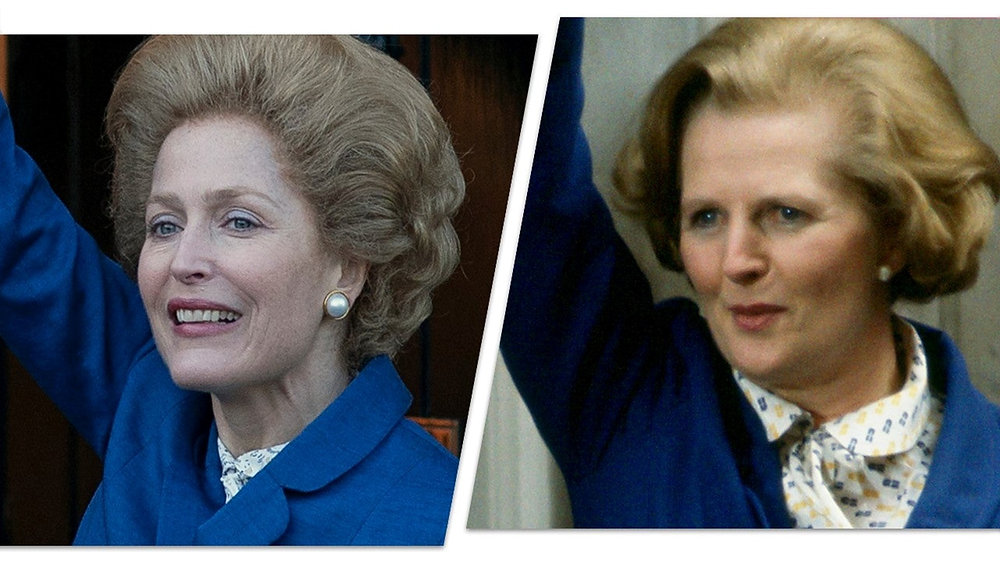
The Controversial History of Margaret Thatcher​

On the international front, Thatcherism was linked with strong nationalism and a tough anti-communist stance during the Cold War. Thatcher's foreign policy was closely aligned with the United States, especially when Ronald Reagan was president, and her government took a hard stance against the Soviet Union. This alignment boosted national pride and reinforced her image as a strong leader.
 
Ronald Regan,

RONALD REAGAN: DOMESTIC AFFAIRS​


By Lou Cannon
Reagan came to the presidency in 1981 with a straightforward and well-articulated domestic agenda. He promised to cut taxes, curb government spending, and balance the federal budget or at least reduce the deficit. His well-crafted Inaugural Address identified the major themes the new President hoped would define his administration.

After noting the severity of the nation's economic crisis, Reagan declared that "government is not the solution to our problem; government is the problem." He took pains to reassure Americans that he did not want to "do away with government." Rather, he sought "to make it work—work with us, not over us; to stand by our side, not ride on our back." Reagan also promised to restore public confidence. Solving the nation's problems required "our best effort, and our willingness to believe in ourselves and to believe in our capacity to perform great deeds . . . And, after all, why shouldn't we believe that? We are Americans."As a conservative, Reagan was committed to reducing the size and mission of government. But as a practical politician, he recognized the importance of reaching out to the Democrats, who controlled the House by a wide margin.


Over the Atlantic and down a bit, and we have Reagan welcoming Jonas Savimbi of the Unita organisation to the White House and speaking of his murderous outfit in Angola winning "a victory that electrifies the world and brings great sympathy and assistance from other nations to those struggling for freedom". Actually what Savimbi was doing was prolonging a civil war in which the UN estimates that 300,000 children died directly or indirectly during the Reagan years, and Angola was covered in landmines. Human Rights Watch reports that Unita's indiscriminate use of landmines, caused there to be more than 15,000 amputees in the country by 1988, ranking the country alongside Afghanistan and Cambodia in the league of blown-off limbs.

Speaking of Afghanistan, the administration responded to the Soviet presence by arming and organising religious zealots to harass and defeat them. When the Soviets withdrew, the Americans lost interest. The Afghans were left with the zealots and the landmines.
 
Are good decisions made?
Top Trump aides told him PM’s prewar regime change forecast was ‘farcical’ — report
NYT reveals PM's high stakes Situation Room pitch to Trump included series of predictions — such as Tehran being too weak to close Hormuz or attack neighbors — that haven't panned out

Prime Minister Benjamin Netanyahu made a high-stakes pitch this February in the White House Situation Room for the US to launch a war against Iran together with Israel, selling US President Donald Trump on a range of predictions regarding how swiftly the joint operation would go that have largely not panned out, according to an extended report in The New York Times on Tuesday.

The report, which detailed how Trump arrived at his decision to go to war on February 28, said Netanyahu told Trump that Iran’s ballistic missile program could be destroyed in a few weeks; Tehran would be so weakened by US-Israeli attacks that it would be unable to block traffic through the Strait of Hormuz; it would likely be unable to strike US assets in neighboring countries;


Are good decisions made?
Top Trump aides told him PM’s prewar regime change forecast was ‘farcical’ — report
NYT reveals PM's high stakes Situation Room pitch to Trump included series of predictions — such as Tehran being too weak to close Hormuz or attack neighbors — that haven't panned out

Prime Minister Benjamin Netanyahu made a high-stakes pitch this February in the White House Situation Room for the US to launch a war against Iran together with Israel, selling US President Donald Trump on a range of predictions regarding how swiftly the joint operation would go that have largely not panned out, according to an extended report in The New York Times on Tuesday.

The report, which detailed how Trump arrived at his decision to go to war on February 28, said Netanyahu told Trump that Iran’s ballistic missile program could be destroyed in a few weeks; Tehran would be so weakened by US-Israeli attacks that it would be unable to block traffic through the Strait of Hormuz; it would likely be unable to strike US assets in neighboring countries;


To be fair, that’s what everyone thought except the Russians and the Chinese were arming them. Which of course they should have accounted for.

All in all it wasn’t a bad plan, it just didn’t work. Other than gorcing Iran to call up from the minors to fillout the Terrorism Inc’s board of governors.
 
Back
Top Bottom