



- Joined
- Mar 22, 2015
- Location
- Untied States of America
With the opening of the U.S. embassy in Jerusalem looming large, speculation continues to mount regarding President Trump’s long-promised plan to achieve Israeli-Palestinian peace. Does it exist? Will it ever be released? Will Secretary of State Mike Pompeo play a more important role in it than his predecessor? And above all, what will such a plan actually entail?
By all credible accounts, the answers to these questions—if there are answers—remain closely held, even within the Trump administration. Yet, on the question of what the plan will entail, Trump’s policy shift on Jerusalem already provides a compelling answer. Indeed, Trump made this answer clear when he stated that his Jerusalem policy marked “the beginning of a new approach to conflict between Israel and the Palestinians.” The contours of this “new approach” are contained in four distinct elements of Trump’s Jerusalem announcement.
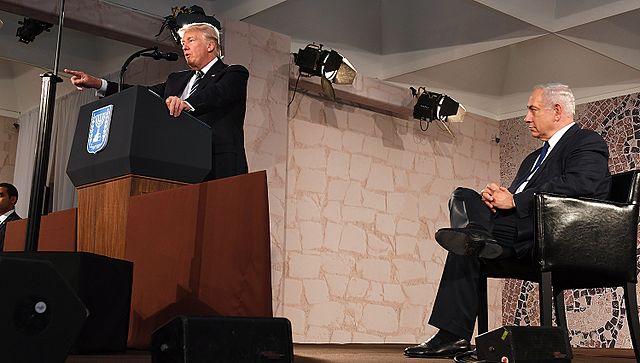
The first element is substantive. Trump’s move endorsed Israeli claims to Jerusalem while offering no legitimacy to the parallel claims of Palestinians. Consistent with this approach, the Trump administration—which since taking office has ended U.S. criticism of settlement expansion and has banished the word “occupied” from its official lexicon—is already shifting U.S. policy to legitimize Israeli construction in the West Bank. Likewise, the ongoing U.S. assault on the UN Relief and Works Agency suggests that Trump is already shifting U.S. policy into alignment with U.S. and Israeli hardliners who have long sought to delegitimize Palestinian refugee claims, with the goal of redefining the refugee issue out of existence. Any Trump plan would likely formalize these and other key policy shifts desired by Israeli and American hardliners (including senior Trump officials), like endorsing Israel’s right to maintain permanent control over significant areas of the West Bank, including the Jordan Valley.
The second element is normative. Trump justified his decision on Jerusalem by saying that it was “nothing more, or less, than a recognition of reality,” despite the fact that the various parties and the world at large hotly contest this “reality.” Subsequent policy shifts on refugees, settlements, and borders will likely be justified, too, as merely recognizing reality—despite the fact that, again, the “reality” in question is nothing of the sort. For example, a shift in policy on settlements will likely be grounded in the lie that there is nothing controversial about Israel building in areas of the West Bank that “everybody knows” Israel will retain in a future peace deal. In fact, such construction violates the very notion of a negotiated agreement, erases the 1967 border as the basis for an agreement, is designed to prevent the establishment of a contiguous Palestinian state or a Palestinian capital in East Jerusalem, and undermines the viability of land swaps.
Continue reading here:
https://lobelog.com/trumps-jerusalem-policy-and-israeli-palestinian-peace/
By all credible accounts, the answers to these questions—if there are answers—remain closely held, even within the Trump administration. Yet, on the question of what the plan will entail, Trump’s policy shift on Jerusalem already provides a compelling answer. Indeed, Trump made this answer clear when he stated that his Jerusalem policy marked “the beginning of a new approach to conflict between Israel and the Palestinians.” The contours of this “new approach” are contained in four distinct elements of Trump’s Jerusalem announcement.
The first element is substantive. Trump’s move endorsed Israeli claims to Jerusalem while offering no legitimacy to the parallel claims of Palestinians. Consistent with this approach, the Trump administration—which since taking office has ended U.S. criticism of settlement expansion and has banished the word “occupied” from its official lexicon—is already shifting U.S. policy to legitimize Israeli construction in the West Bank. Likewise, the ongoing U.S. assault on the UN Relief and Works Agency suggests that Trump is already shifting U.S. policy into alignment with U.S. and Israeli hardliners who have long sought to delegitimize Palestinian refugee claims, with the goal of redefining the refugee issue out of existence. Any Trump plan would likely formalize these and other key policy shifts desired by Israeli and American hardliners (including senior Trump officials), like endorsing Israel’s right to maintain permanent control over significant areas of the West Bank, including the Jordan Valley.
The second element is normative. Trump justified his decision on Jerusalem by saying that it was “nothing more, or less, than a recognition of reality,” despite the fact that the various parties and the world at large hotly contest this “reality.” Subsequent policy shifts on refugees, settlements, and borders will likely be justified, too, as merely recognizing reality—despite the fact that, again, the “reality” in question is nothing of the sort. For example, a shift in policy on settlements will likely be grounded in the lie that there is nothing controversial about Israel building in areas of the West Bank that “everybody knows” Israel will retain in a future peace deal. In fact, such construction violates the very notion of a negotiated agreement, erases the 1967 border as the basis for an agreement, is designed to prevent the establishment of a contiguous Palestinian state or a Palestinian capital in East Jerusalem, and undermines the viability of land swaps.
Continue reading here:
https://lobelog.com/trumps-jerusalem-policy-and-israeli-palestinian-peace/