



- Joined
- May 15, 2022
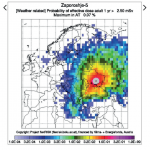
From a very well sourced analysis by Bellona posted earlier this year, this is the simulated effective dose from a potential accident at the ZNPP in its current (cold shutdown) state. This chart indicates the percentage probability that a random adult would receive a dose of 2.5 mSv related directly to the accident.
2.5 mSv is roughly half the yearly dose from natural sources of radiation, about three times less than a chest CT, and approximately 80 times less than the lowest dose scientifically linked to increased cancer risk. The colors in the chart correspond to the likelihood of receiving such a dose (red being 1 in 10; green being 1 in 100, and blue being 1 in 1000).
The main takeaway from this is that a nuclear accident at ZNPP would only pose a significant health risk in the immediate vicinity of the plant.
2.5 mSv is roughly half the yearly dose from natural sources of radiation, about three times less than a chest CT, and approximately 80 times less than the lowest dose scientifically linked to increased cancer risk. The colors in the chart correspond to the likelihood of receiving such a dose (red being 1 in 10; green being 1 in 100, and blue being 1 in 1000).
The main takeaway from this is that a nuclear accident at ZNPP would only pose a significant health risk in the immediate vicinity of the plant.


