• Guests may view all public nodes. However, you must be registered to post.

US, DPRK, ROK | 2024

Status
Not open for further replies.
North Korea claimed Saturday it has discovered remains of at least one drone sent from South Korea, describing it as the same type displayed on the South's Armed Forces Day in Seoul earlier this month.Citing a statement by a defense ministry spokesperson, the Korean Central News Agency reported that the Pyongyang Municipal Security Bureau of the Ministry of Public Security found the remains of a crashed drone in an area in the capital on Oct. 13.An inquiry had determined that the drone was a "light one for long-range reconnaissance" run by the South Korean military's "Drone Operation Command," it said.KCNA further reiterated that the drone was the same type as the vehicle-carried drone publicly displayed during an event marking South Korean Armed Forces Day on Oct. 1.


North Korea claimed Saturday it has discovered remains of at least one drone sent from South Korea, describing it as the same type displayed on the South's Armed Forces Day in Seoul earlier this month.Citing a statement by a defense ministry spokesperson, the Korean Central News Agency reported that the Pyongyang Municipal Security Bureau of the Ministry of Public Security found the remains of a crashed drone in an area in the capital on Oct. 13.An inquiry had determined that the drone was a "light one for long-range reconnaissance" run by the South Korean military's "Drone Operation Command," it said.KCNA further reiterated that the drone was the same type as the vehicle-carried drone publicly displayed during an event marking South Korean Armed Forces Day on Oct. 1.


But sending massive waves of poop balloons is okay... Alright Kimmy.
 
N. Korea installing unidentified structures on disconnected inter-Korean road: source
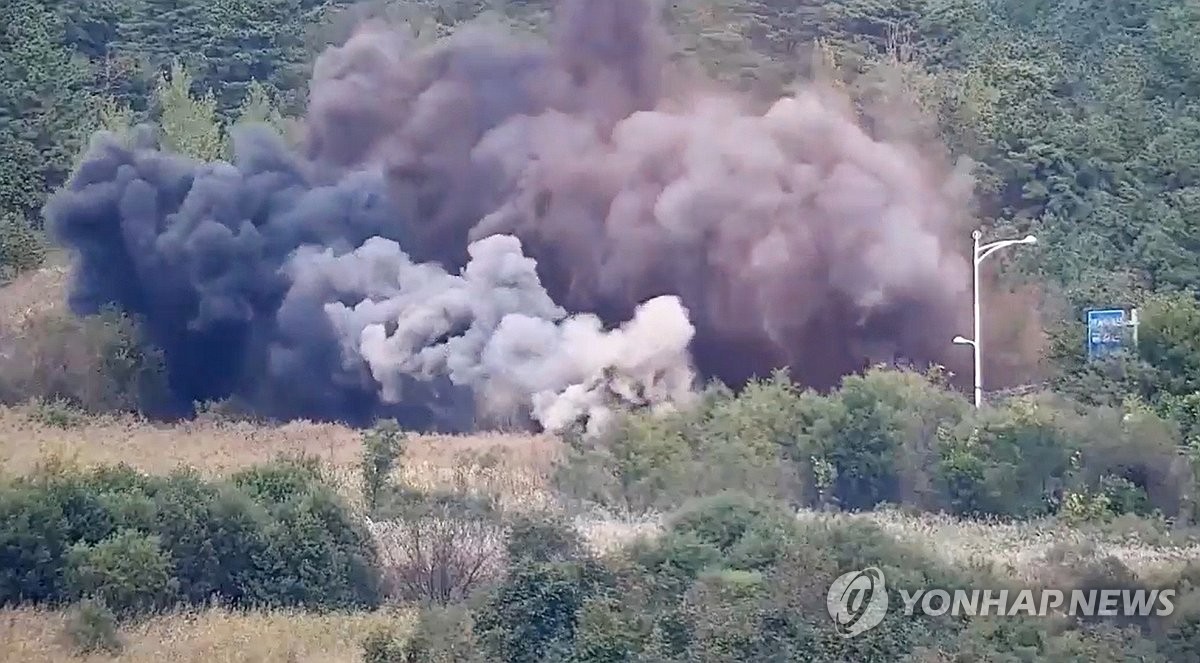
SEOUL, Oct. 24 (Yonhap) -- North Korea is building unidentified structures on an eastern inter-Korean road that it blew up last week, a source said Thursday, amid heightened cross-border tensions over the North's border activities.

Last Tuesday, North Korea blew up sections of the eastern Donghae Line and the western Gyeongui Line, just north of the border, days after vowing to cut off all roads and railways linked to the South and build front-line defense structures.
Since the explosions, South Korea's border surveillance assets have spotted the North leveling the ground on the two disconnected roads, as well as recently installing the structures on the Donghae road, according to the military source.

The structures are suspected to possibly serve as the frame for concrete border barriers.

The source said the military has yet to detect signs of the North building such structures on the Gyeongui road.

This month's explosions marked the complete dismantling of inter-Korean land routes once seen as symbols of reconciliation and cooperation between the two Koreas.

North Korea has been wiping out traces of unification after its leader Kim Jong-un late last year defined the Koreas as "two hostile states" and said there is no point in seeking reconciliation and unification with South Korea.
 
For China, the deployment of North Korean soldiers to Ukraine threatens to destabilise the delicate balance of power on the Korean peninsula. Here’s why:
‘China will not like it one bit’: Beijing uneasy with North Korean troops in Russia
Deepening Moscow-Pyongyang ties could destabilise Korean peninsula and embolden US-led alliances in region

Even before Kim Jong Un sent troops to support Russia’s fight against Ukraine, there were signs that North Korea’s main backer, China, was unhappy with his regime’s deepening ties with Moscow.

In a letter last week seen as signalling Beijing’s growing displeasure, Chinese President Xi Jinping thanked Kim for a congratulatory message on the 75th anniversary of Communist China’s founding — but omitted a traditional reference to North Korea as a “friendly neighbouring country”.

Kim appears unabashed. Western allies this week revealed that North Korea had sent more than 12,000 troops, disguised as ethnic minorities from Siberia, to fight on Russia’s front lines, a move that analysts say will only heighten Beijing’s concerns over its neighbours’ increasingly cosy military ties.

“The North Korean troop deployment is a dramatic step, and China will not like it one bit,” said Andrei Lankov, a North Korea expert at Kookmin University in Seoul.

For China, the deployment — a sharp escalation in a partnership that has deepened since Moscow’s full-scale invasion of Ukraine in 2022 but was previously largely limited to munitions — threatens to destabilise the delicate balance of power on the Korean peninsula.
Closer Russian-North Korean ties could also spur the US, Japan and South Korea to strengthen their military alliance in east Asia, which Beijing already views as aimed at containing its growing power.

North Korean soldiers receive equipment at a training ground in eastern Russia © The Centre for Strategic Communication and Information Security of Ukraine/Reuters
Beijing wants to avoid at all costs a rerun of the early years of the cold war, when the Soviet Union, North Korea and China formed a “northern triangle” that faced off against a “southern triangle” of South Korea, Japan and the US, Chinese scholars said.

“China’s situation now is really difficult, genuinely a dilemma,” said Zhu Feng, executive dean of the School of International Studies at Nanjing University. “On the one hand, we don’t want to see the return of the cold war to east Asia. On the other hand, the US is trying to strengthen solidarity with South Korea and Japan.”
Japan’s chief cabinet secretary Yoshimasa Hayashi on Friday said that escalating Russian-North Korean co-operation was “deeply concerning” and would “worsen the situation in Ukraine and impact the security of the region around Japan”.

China’s wariness has been evident since April, when it sent one of its most senior officials, Zhao Leji, to Pyongyang. While the two sides did not reveal details of the talks, analysts said Beijing was unhappy about the prospect of losing influence over North Korea, which it sees as a crucial buffer state against US-backed South Korea.

In June, Kim went further, agreeing a strategic partnership with Putin that contained a mutual assistance clause in cases of aggression against one of the signatories — a move that was of deep concern to China.

The following month, the Chinese ambassador to North Korea did not attend July anniversary commemorations in Pyongyang marking the end of the Korean war, despite the two countries marking 75 years of diplomatic relations this year.

China’s foreign affairs ministry on Thursday said Beijing was “not aware of the relevant situation” when asked about Pyongyang’s decision to send troops.
China’s concerns include becoming potentially embroiled in the conflict itself if North Korean troops’ involvement in the fight against Ukraine made the Asian country — Beijing’s only military alliance partner — a legitimate target for Kyiv, said Shen Dingli, a Shanghai-based international relations professor.

“China has a treaty-bound obligation to defend North Korea,” said Shen. “If North Korea is attacked, China is legally bound to send its troops and [if necessary] to use all means to protect North Korea.”

Some defence analysts have raised concerns that North Korea’s contribution to Russia’s war effort could mean Pyongyang has secured a reciprocal commitment from Moscow to intervene in a conflict on the Korean peninsula — a prospect that would alarm Beijing.

But Lankov said such a possibility remained “extremely remote”.

“The North Koreans are doing this for money, military technologies and battlefield experience, not out of any sense of solidarity with Russia,” he said. “Russia is not going to get themselves into trouble just out of gratitude to Kim Jong Un.”
China is also worried about Russia helping North Korea improve its nuclear capabilities, which could accelerate an arms race in the region, said Chen Qi at the Institute of International Relations at Tsinghua University in Beijing. Kim visited Russia’s Vostochny Cosmodrome, the country’s most advanced space rocket launch site, last year.

But Chen was sceptical Russia would prioritise its relations with North Korea over those with China, on which Moscow has relied for economic and geopolitical support since its full-scale invasion of Ukraine.

Jaewoo Choo, head of the China centre at the Korea Research Institute for National Security think-tank in Seoul, said “Beijing may actually be secretly pleased that Russia is providing economic aid to North Korea in China’s place”, at a time when China’s own domestic growth was lagging.

“China remains in the driving seat because ultimately it has control over both countries,” said Lankov, referring to Pyongyang’s reliance on aid from Beijing. “If China wanted to put a stop to this nonsense as they see it, then they could do so.”
 
📣 🇰🇵

North Korea has increased security for its leader Kim Jong Un due to fears of an assassination attempt.
South Korea's spy agency told lawmakers today that along with increasing security around it, North Korea is using technology to disrupt communications devices and drones close to the leader.


South Korean Military Says the North Appears Poised to Conduct Nuclear and ICBM Tests

South Korea’s military intelligence agency told lawmakers Wednesday that North Korea has likely completed preparations for its seventh nuclear test and is close to test-firing a long-range missile capable of reaching the United States.

In a closed-door hearing, the agency also said some advance units of North Korean troops sent to Russia may have arrived at battlefronts as the forces prepare to move to the Kursk region, where Russia has struggled to push back a Ukrainian incursion, according to two lawmakers who attended the meeting.

Earlier this month, South Korean President Yoon Suk Yeol told The Associated Press that he expected North Korea to stage major provocations like nuclear and intercontinental ballistic missile tests around the U.S. election to dial up pressure on Washington and its allies.

North Korean leader Kim Jong Un has also flaunted his military nuclear program in recent months, testing various missile systems and disclosing a secretive facility for producing weapons-grade uranium in September.

The agency believes that North Korea has finished preparations to conduct a nuclear test at its testing ground in the northeastern town of Punggye-ri, with the detonation likely to be carried out at tunnel No. 3, said Lee Seong Kweun, one of the lawmakers who attended the hearing. North Korea conducted its sixth and last nuclear test in 2017.

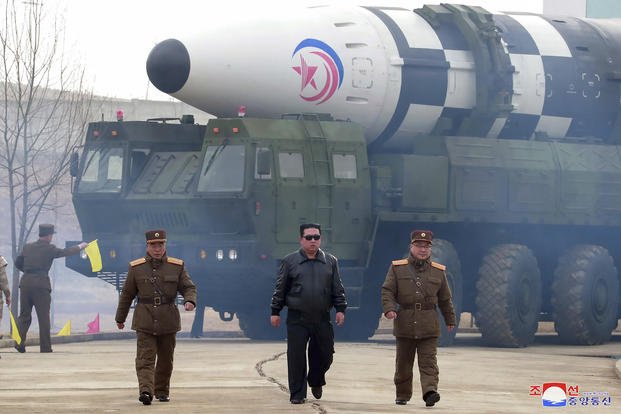
The agency also said it’s detecting signs that the North will soon be ready to test launch an ICBM designed to reach the U.S. mainland, including the placement of a launch vehicle and a missile, said Lee and fellow lawmaker Park Sunwon. The agency believes the ICBM test could take place some time in November.

“We cannot specify the exact location but the transporter-erector launcher has been deployed at a certain area where it could be anticipated that an ICBM test aimed at verifying atmospheric re-entry technology could be conducted,” Lee added.

All of North Korea’s ICBM tests since 2017 have been conducted at a high angle to avoid the territory of neighbors. Experts have said the North may eventually seek to flight test its weapons at an angle closer to a normal ballistic trajectory to verify whether the warhead would survive the harsh conditions of atmospheric re-entry.

The re-entry vehicle technology is considered one of the few remaining technological obstacles North Korea needs to overcome to obtain functioning long-range missiles.

Tensions on the Korean Peninsula have worsened since 2022 after Kim used Russia’s invasion of Ukraine as a distraction to accelerate the growth of his nuclear weapons and missile program.


 

North Korea launches ICBM in longest-ever ballistic missile test

North Korea launched an intercontinental ballistic missile (ICBM) towards waters off its eastern coast in what is believed to be the longest flight-time yet for a North Korean missile, authorities in South Korea and Japan said, raising fears a new weapon has been developed.
South Korea’s Joint Chiefs of Staff (JCS) said in a statement the missile launched towards the East Sea, which is also known as the Sea of Japan, was detected at about 7:10am local time (22:10 GMT) and was fired on a “lofted trajectory”.
The JCS said later that initial analysis points to a possible use by North Korea of a newly developed solid-fuel booster for its long-range missiles.
 

North Korea's Long-Range Missile Test Signals Its Improved, Potential Capability to Attack US

North Korea test-fired an intercontinental ballistic missile for the first time in almost a year Thursday, demonstrating a potential advancement in its ability to launch long-range nuclear attacks on the mainland U.S.

The launch was likely meant to meant grab American attention days ahead of the U.S. election and respond to condemnation over the North's reported troop dispatch to Russia to support its war against Ukraine. Some experts speculated Russia might have provided technological assistance to North Korea over the launch.
 

North Korea's Long-Range Missile Test Signals Its Improved, Potential Capability to Attack US

North Korea test-fired an intercontinental ballistic missile for the first time in almost a year Thursday, demonstrating a potential advancement in its ability to launch long-range nuclear attacks on the mainland U.S.

The launch was likely meant to meant grab American attention days ahead of the U.S. election and respond to condemnation over the North's reported troop dispatch to Russia to support its war against Ukraine. Some experts speculated Russia might have provided technological assistance to North Korea over the launch.
👀 🔊 👂
 

North Korea's Long-Range Missile Test Signals Its Improved, Potential Capability to Attack US

North Korea test-fired an intercontinental ballistic missile for the first time in almost a year Thursday, demonstrating a potential advancement in its ability to launch long-range nuclear attacks on the mainland U.S.

The launch was likely meant to meant grab American attention days ahead of the U.S. election and respond to condemnation over the North's reported troop dispatch to Russia to support its war against Ukraine. Some experts speculated Russia might have provided technological assistance to North Korea over the launch.
(Bloomberg) -- The US and South Korea conducted joint air drills in a show of force after North Korea fired an intercontinental ballistic missile that flew longer than any previous one tested by Kim Jong Un’s regime amid tensions over its dispatch of troops to Russia.

Hours after North Korea’s missile launch, South Korea’s defense ministry said it conducted joint air drills with the US that involved some 110 military planes, including American fighter jets such as the F-35B, and the MQ-9 military drone.
 
U.S. flies long-range bomber in drill with South Korea, Japan in reaction to the North's missile test:
SEOUL, South Korea - The United States flew a long-range bomber in a trilateral drill with South Korea and Japan on Sunday in response to North Korea’s recent test-firing of a new intercontinental ballistic missile designed to strike the U.S. mainland, South Korea’s military said.
North Korea on Thursday tested the newly developed Hwasong-19 ICBM, which flew higher and stayed in the air longer than any other missile it has fired. North Korean leader Kim Jong Un called it “an appropriate military action” to cope with external security threats posed by its rivals.
 
U.S. approves $5 billion sale of early warning aircraft to South Korea:
The State Department this week signed off on a plan for South Korea to buy four military jets that can track other aircraft and ships over long distances.
The nearly $5 billion deal was for the Boeing-made E-7 airborne early warning and control aircraft often called the Wedgetail. It has communications and navigation equipment, spare parts and countermeasures for self-defense.
“This proposed sale will support the foreign policy goals and national security objectives of the United States by improving the security of a major ally that is a force for political stability and economic progress in the Indo-Pacific region,” the Defense Security Cooperation Agency said in a statement.
 
South Korea’s Joint Chiefs of Staff Reports; "North Korea’s GPS jamming provocations are disrupting our naval vessels and civilian aircraft."

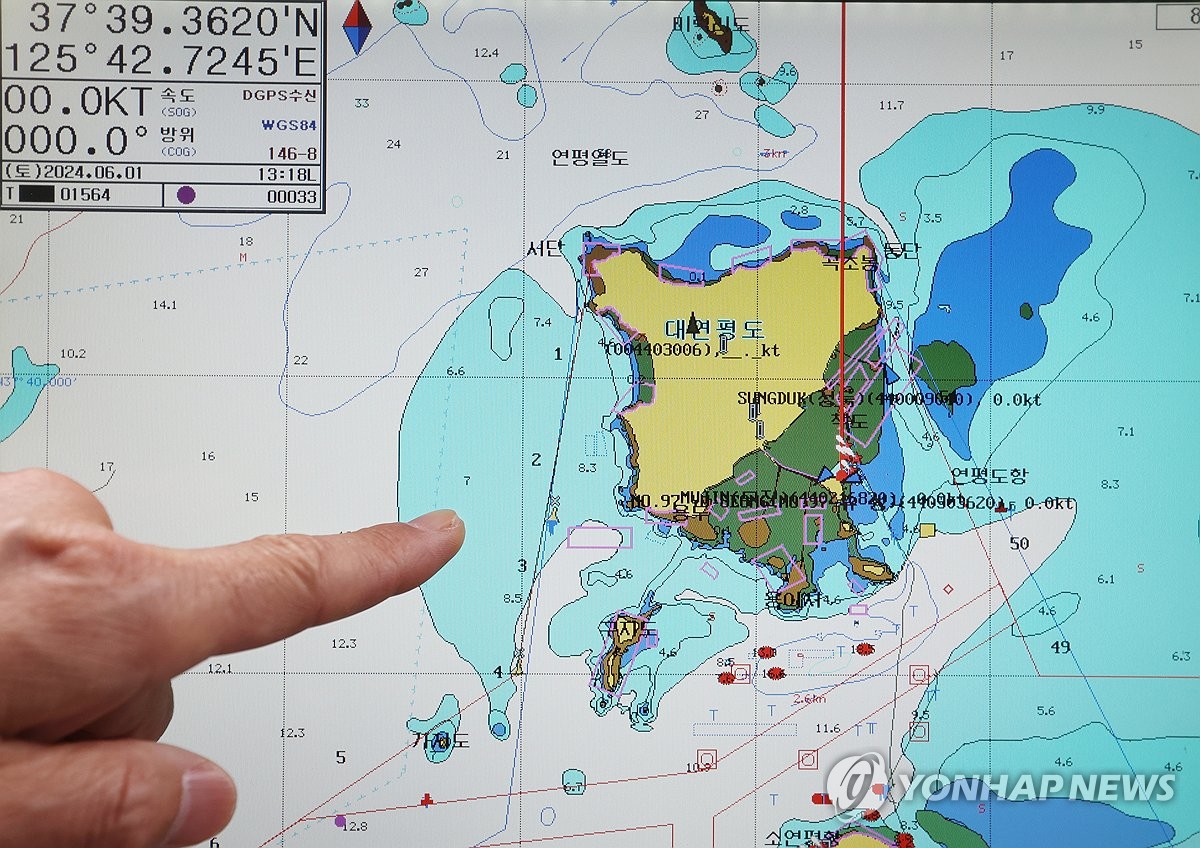
The jamming attacks were conducted in the North's Haeju and Kaesong areas, the Joint Chiefs of Staff (JCS) said, warning vessels and civilian aircraft operating in the Yellow Sea to beware of the attacks.

Military operations and equipment were not affected, according to the JCS.
The latest threat came three days after the South's military detected a similar movement Tuesday.

The GSP jamming attacks this week, however, involved a weaker signal compared with the multiple attacks the North conducted near the northwestern border areas between May 29 and June 2, according to a JCS official.
In June, South Korea raised the North's repeated GPS jamming with three relevant international agencies -- the International Telecommunication Union (ITU), the International Civil Aviation Organization (ICAO) and the International Maritime Organization (IMO) -- requesting due measures to be taken for the provocations.

North Korea is a member of the ITU, ICAO and IMO.

In response, the ICAO adopted a decision raising serious concerns over North Korea's recent jamming of GPS navigation signals, specifying the North by its name for the first time.
 
As part of a strategic programme, the #USA is planning to withdraw the #A10 Thunderbolt II attack aircraft from #SouthKorea by the end of the 2025 financial year.

These aircraft, which are designed for close air support missions, are to be replaced by the more suitable #F16 Fighting Falcon, #F35 Lightning II and #F15EX Eagle II.

The multi-role fighters have improved stealth, longer range and enhanced combat capabilities that will strengthen the air superiority of the US and its allies on the Korean peninsula.

Read More Here:
 
N. Korea cuts power lines supplying electricity to shuttered Kaesong complex:
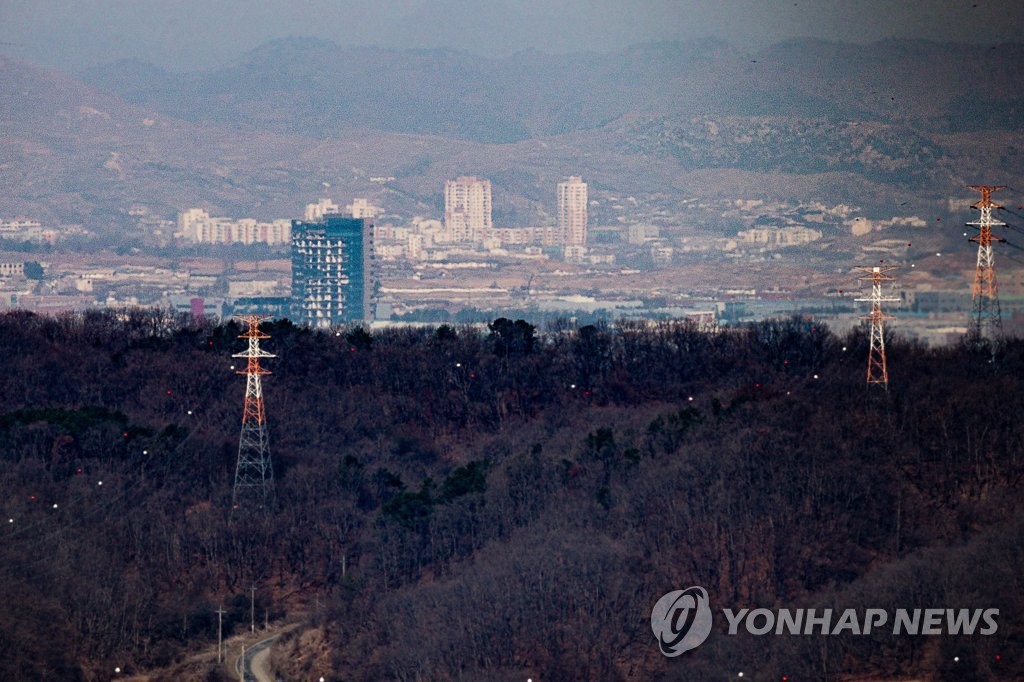
SEOUL, Nov. 26 (Yonhap) -- North Korea has cut power lines installed by South Korea to supply electricity to a now-shuttered joint industrial park in the North Korean border city of Kaesong, South Korea's military said, the latest in Pyongyang's move to sever inter-Korean ties.
The military has detected North Korean soldiers removing part of the power lines connecting transmission towers built along the Gyeongui road since Sunday, officials said, in what appeared to be preparations to demolish the transmission towers built by the South. The North has yet to take down the now-defunct transmission towers, according to the officials.
South Korea built 48 transmission towers -- including 15 located in the North -- to supply electricity to the now-shuttered Kaesong Industrial Complex. But power supply has been halted since June 2020, when the North blew up an inter-Korean liaison office at the complex after lashing out at Seoul for failing to stop North Korean defectors in South Korea from sending anti-Pyongyang leaflets across the border. The latest move came as North Korea has been ramping up inter-Korean tensions and wiping out traces of unification after its leader Kim Jong-un defined the Koreas as "two hostile states" late last year.
The North has since removed street lamps and installed mines along its side of the Gyeongui and Donghae roads, as well as deployed troops to build apparent anti-tank barriers and reinforce barbed wire within its side of the Demilitarized Zone separating the two Koreas. Last month, the North blew up its part of the two roads after its military announced a plan to "completely separate" North Korea's territory from the South.
 

EU considering stationing defense attache with Tokyo delegation:

Brussels –
The European Union is considering stationing a military adviser with its delegation in Tokyo, senior EU military officials have said, following Brussels’ launch of a security and defense partnership with Japan earlier this month.


It’s unclear when such an adviser would be posted, as a political decision has yet to be made, but, if established, the role would be equivalent to that of a defense attache — Brussels' first in Japan.


“It's possible that the EU will decide to expand its current network of military advisers to areas and countries like Japan and South Korea,” an official at the EU’s Military Staff told reporters in Brussels on Wednesday.

"The adviser would provide military expertise within the delegation and interact with counterparts from the Self-Defense Forces," he added.

The consideration comes as the EU and Japan prepare to ramp up security cooperation under their new partnership.

Officials have said they see opportunities for the SDF to work together with EU forces in a number of ways. This could include collaboration with Brussels' nascent rapid reaction troops within the scope of the EU's Common Security and Defense Policy, which also enables Europe to take a leading role in international peacekeeping operations in coordination with the United Nations.

Formally known as the EU Rapid Deployment Capacity, these troops, which will complement NATO, are set to reach full operational capability next year. Depending on the mission, they could be up to 5,000 strong and deploy within 10 to 15 days to respond to various types of crises outside EU territory.

Adopted on Nov. 1, the EU-Japan security and defense partnership lays the groundwork for closer cooperation in critical areas. These include naval cooperation such as joint training and capacity-building of other Indo-Pacific countries, finding ways to jointly combat terrorism, and exploring potential avenues for joint initiatives in the defense industry, as the strategic partners embrace the argument that the security of the Euro-Atlantic and Indo-Pacific regions is "inseparable."
 
As global defense spending surges, South Korean arms makers look like a clear winner:
Key Points:
  • South Korean defense stocks have had a roaring year in 2024 as global defense spending soared, due to geopolitical uncertainties.
  • Basically, the appetite for South Korean arms is because they cost cheaper, arrive faster, and are almost as good as their top-tier counterparts from other countries.
 
🆕 North Korea has announced a strong strategy toward the United States during their annual year-end general meeting. They believe the military cooperation between South Korea, the U.S., and Japan is evolving into an invasive nuclear military bloc.

KJU ordered the refinement of warfare tactics to meet the demands of modern warfare and the shifting war attempts by "enemies," while also calling for continued improvement in the warfare capacities of the army.

During the session, Pak Thae-song, a party secretary, was appointed premier, replacing his predecessor Kim Tok-hun (Yonhap).

 
Status
Not open for further replies.
Back
Top Bottom