US envoys Steve Witkoff and Jared Kushner are expected to arrive in Israel on Monday for talks, with local reports indicating a meeting with PM Netanyahu.
IDF says it will conduct a three day drill in the West Bank and Jordan Valley starting tomorrow morning, warning of increased movement of forces and vehicles during the exercise.
Iran has increased missile production and, in a next round, aims to fire about 2,000 at once to saturate Israeli defenses, not about 500 over 12 days as in June.
DISCLAIMER: Analyst assessment only, not an official statement by Iran or any other government.
Israeli officials assess Iran quietly relocated its highly enriched uranium to a secure location, contradicting Tehran’s claim that the material remains “under rubble” at bombed sites.
NOTE: This is attribution to Israeli officials through NYT, not an IAEA or on record Israeli confirmation. Context, the IAEA still lacks full access and has not verified Iran's stockpile’s status.
IAEA Confidential Report: verification of Iran’s 60 percent enriched uranium stock is “long overdue.” The agency says it lost continuity of knowledge after June strikes and still lacks access to damaged sites. Last verified figure before access was cut: about 440.9 kg at 60 percent, which could yield roughly 10 devices if further enriched. The agency has requested a special accounting report from Iran; none has been filed.
Axios, citing Israeli and U.S. officials, reports that Israel is seeking a new 20 year security and military aid agreement with Washington, double the length of previous 10 year MOUs. The proposal reportedly includes “America First” style provisions aimed at addressing growing skepticism about foreign aid among Republicans in Congress and within parts of Trump’s base.
According to these reports, the current memorandum of understanding, which provides roughly 4 billion USD annually and expires in 2028, would be replaced by a longer term framework that shifts some funds toward joint projects and co-production that benefit U.S. industry, in an effort to make the package more politically sustainable in Washington.
Iranian media say authorities will run a drill on Friday to test the national mobile phone warning system, sending test alerts to selected users between 10:00 and 12:00 local time.
Officials describe the exercise as a technical review of the Cell Broadcasting system used for earthquakes, floods, and other emergencies, and state that the alerts will appear automatically on some phones, may include sound and vibration, and require no action from the public.
The test comes as senior Iranian officials speak more frequently about the possibility of renewed conflict with Israel and point to upgraded missile and air defense capabilities after the June 12 day war.
According to a Pentagon intelligence assessment cited by the New York Times, U.S. officials are warning that Saudi Arabia’s bid to buy F-35 jets carries a risk that China could gain access to the aircraft’s advanced technology, given Riyadh’s expanding security ties with Beijing.
The same debate revives long standing concerns in Washington over preserving Israel’s U.S. mandated “qualitative military edge,” since approving F-35s for another regional power would narrow Israel’s lead in stealth, sensors and integrated air combat capability.
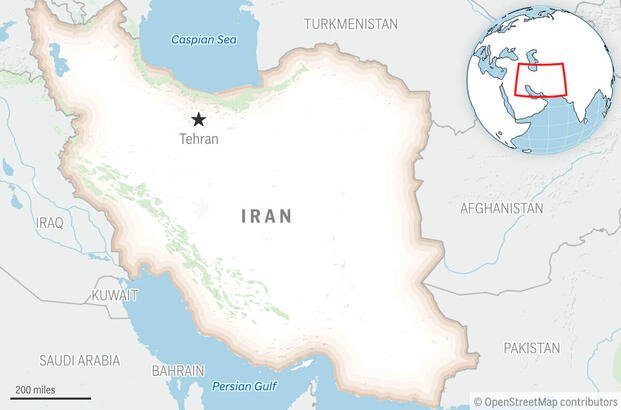
Washington says it is “actively monitoring” an incident involving the Marshall Islands flagged oil tanker M/V Talara near Iran, after the ship suddenly deviated from its course in the Gulf of Oman amid indications it was intercepted and steered toward Iranian waters.
The statement from the US Navy’s Bahrain based 5th Fleet stresses that commercial vessels are entitled to “largely unimpeded rights of navigation and commerce on the high seas,” while maritime security firms and media reports point to likely Iranian state involvement in the diversion.
Beirut Airport, Iranian Flights, and Israeli Threats:
Lebanon’s Public Works and Transport Minister Fayez Rasamny told MTV Lebanon that Beirut’s Rafic Hariri International Airport was explicitly threatened with bombing if Iranian flights were allowed to land.
He said Lebanese authorities, after the United States relayed a warning that Israel would target the airport if a specific Iranian passenger plane arrived, decided not to allow that flight to land and later blocked additional Iranian flights for the same reason.
Iran seized a Marshall Islands-flagged oil tanker as it traveled through the narrow Strait of Hormuz, a U.S. official said, turning the ship into Iranian territorial waters in the first-such interdiction in months in the strategic waterway.
www.military.com
Iran Seizes Tanker in Strait of Hormuz, US Official Says, as Tensions Remain High in Region
Iran seized a Marshall Islands-flagged oil tanker as it traveled through the narrow Strait of Hormuz on Friday, a U.S. official said, turning the ship into Iranian territorial waters in the first-such interdiction in months in the strategic waterway.
The ship, the Talara, had been traveling from Ajman, United Arab Emirates, onward to Singapore when Iranian forces intercepted it, said the U.S. defense official, who spoke on condition of anonymity to discuss intelligence matters.
The company has “notified the relevant authorities and is working closely with all relevant parties — including maritime security agencies and the vessel owner — to restore contact with the vessel,” the firm said. “The safety of the crew remains our foremost priority.”
The Kremlin says President Vladimir Putin and Prime Minister Benjamin Netanyahu held a phone call on the Middle East situation.
According to the Russian readout, the leaders discussed: Developments in Gaza in the context of the ceasefire and exchanges of detainees. The status of Iran’s nuclear program. Steps to further stabilize the situation in Syria and the wider region.
Both sides framed the call as part of an ongoing series of contacts on regional issues. The conversation comes as Russia promotes its own Gaza draft at the UN Security Council alongside competing United States proposals.
IAEA: Iran Weighing A Russia & China Cooperation Plan:
Senior adviser Kamal Kharrazi says Tehran is “ready to consider” a Russia and China mediation plan to revive Iran’s cooperation with the IAEA, presenting it as an alternative track to the Western backed critical resolution expected at the IAEA Board of Governors this week.
Tasnim and other Iranian outlets simultaneously amplify a Russian warning that a new “anti Iran” resolution would nullify recent Iran and IAEA engagement and punish Tehran for defending its nuclear sites after the June attacks.
In Vienna, Iranian, Russian and Chinese envoys have already held trilateral coordination meetings with the IAEA Director General ahead of the 19th to 21st November Board session, underlining a joint front against what they call “politicization” of the agency.
Canada & Israel | Canada Accused of Still Arming Israel:
A new report by the Arms Embargo Now coalition alleges that Canada is still indirectly supplying weapons to Israel despite Ottawa’s stated freeze on new export permits.
According to the report, Canadian firms have shipped F-35 components and explosives to U.S. plants that build aircraft and munitions later exported to Israel. It also traces European-sourced TNT moving through Canada to U.S. bomb manufacturers.
Anadolu Agency, summarizing the findings, says this creates a “U.S. loophole” that allows Canadian-linked parts and materials to continue entering the Israeli supply chain even after Canada announced its permit freeze.
Global Affairs Canada rejects this framing. In an August 2025 statement, the government called earlier related reporting “flawed,” reiterated that no new permits have been approved for goods that could be used in Gaza since January 2024, and says relevant existing permits have been suspended.
The broader debate centers on whether participation in multinational programs and component supply chains amounts to violating Canada’s stated export policy, or whether Ottawa’s obligations apply only to direct exports that it licenses explicitly.
Mehr, citing an unnamed “informed source”, says reports that Iran is reviewing a complete halt to uranium enrichment are “completely fake”, “distorted”, and part of psychological warfare, insisting there has been no discussion at any level about stopping enrichment and that policy continues unchanged.
The denial lands alongside separate reporting that enrichment is already at a standstill for technical reasons after recent strikes on nuclear sites, which is very different from a political decision to abandon enrichment.
Net effect: audiences are being whiplashed between “enrichment halted”, “enrichment cannot be halted”, and “halt review is fake”. That confusion is exactly the space where misinformation and psychological operations thrive.
NOTE:This post is based on today’s Mehr report plus regional coverage of technical shutdowns at enrichment sites. Mehr is a pro-government outlet and the denial is on background, not a signed legal or policy act. Rumors of a policy decision to end enrichment are not supported by primary sources at time of writing.
This site uses cookies to help personalise content, tailor your experience and to keep you logged in if you register.
By continuing to use this site, you are consenting to our use of cookies.