• Guests may view all public nodes. However, you must be registered to post.

US-Israel/Iran | May 10th/June 1st | Reports

Status
Not open for further replies.
TAMPA, Fla. — U.S. Central Command (CENTCOM) forces reached the milestone of redirecting 100 commercial vessels, May 23, while enforcing a maritime blockade against Iran. American forces began implementing the blockade April 13 against commercial ships entering and exiting Iranian ports, in accordance with a presidential proclamation. Over the past six weeks, more than 15,000 Soldiers, Sailors, Marines and Airmen have redirected 100 vessels, disabled four, and allowed 26 humanitarian aid ships to pass.
 
🇺🇸⚔️🇮🇷
Trump also said: “I think it’s a solid 50 : 50 chance,” he said. “Either we make a deal, or I’ll blow them up for good. A deal would include nuclear issues like enrichment and the stockpile of enriched uranium. There’s nothing they can do to get me off of it. I don’t think Netanyahu is worried. I wouldn’t make a deal if it wasn’t good for Israel. Some people would prefer a deal and others would prefer to resume the war. I think Netanyahu is torn between the options.”

🔗⤵️
 
🇮🇱⚔️🇮🇷
Israeli Channel 13 reports the IDF is on “peak alert” and preparing for the possibility of renewed fighting against Iran. The report says Israel’s defense establishment is monitoring Trump’s remarks and Iranian efforts to organize for a return to fighting, while IDF forces are deployed in defense and offense across all sectors and remain in close contact with CENTCOM.

🔗⤵️
 
🇮🇱⚔️🇮🇷
Prime Minister Benjamin Netanyahu is holding a limited security discussion tonight amid heightened Iran tensions. Israel Hayom reports the discussion is with the limited cabinet, while KAN reports it comes as Israel assesses Trump is leaning toward striking Iran.

🔗⤵️
 
Go to bed everyone. 🫤

Donald J. Trump
@realDonaldTrump

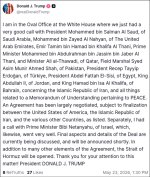
I am in the Oval Office at the White House where we just had a very good call with President Mohammed bin Salman Al Saud, of Saudi Arabia, Mohammed bin Zayed Al Nahyan, of The United Arab Emirates, Emir Tamim bin Hamad bin Khalifa Al Thani, Prime Minister Mohammed bin Abdulrahman bin Jassim bin Jaber Al Thani, and Minister Ali al-Thawadi, of Qatar, Field Marshal Syed Asim Munir Ahmed Shah, of Pakistan, President Recep Tayyip Erdoğan, of Türkiye, President Abdel Fattah El-Sisi, of Egypt, King Abdullah II, of Jordan, and King Hamad bin Isa Al Khalifa, of Bahrain, concerning the Islamic Republic of Iran, and all things related to a Memorandum of Understanding pertaining to PEACE. An Agreement has been largely negotiated, subject to finalization between the United States of America, the Islamic Republic of Iran, and the various other Countries, as listed. Separately, I had a call with Prime Minister Bibi Netanyahu, of Israel, which, likewise, went very well. Final aspects and details of the Deal are currently being discussed, and will be announced shortly. In addition to many other elements of the Agreement, the Strait of Hormuz will be opened. Thank you for your attention to this matter! President DONALD J. TRUMP

8 ReTruths · 27 Likes
May 23, 2026, 1:30 PM

344.jpg
 

Exclusive: What's inside the Iran deal Trump is close to signing

The agreement the U.S. and Iran are close to signing involves a 60-day ceasefire extension during which the Strait of Hormuz would be reopened, Iran would be able to freely sell oil, and negotiations would be held on curbing Iran's nuclear program, according to a U.S. official.

The deal would avoid an escalation of the war and decrease the pressure on the global oil supply. However, it's unclear whether it will lead to a lasting peace agreement that also addresses President Trump's nuclear demands.

Both Trump and the mediators have indicated the deal could be announced on Sunday, though it has not been finalized and could still fall apart.

What's in the deal
Both sides would sign a memorandum of understanding (MOU) that would last 60 days and could be extended by mutual consent.During the 60-day period, the Strait of Hormuz would be open with no tolls and Iran would agree to clear the mines it deployed in the strait to let ships pass freely.In exchange, the U.S. would lift its blockade on Iranian ports and issue some sanctions waivers to allow Iran to sell oil freely.
  • The U.S. official acknowledged that would be a boon to Iran's economy, but said it would also give significant relief to the global oil market.
The U.S. official said the faster the Iranians clear the mines and let shipping resume, the faster the blockade will be lifted.

  • The official said Trump's key principle in the agreement is "relief for performance."
  • Iran wanted funds unfrozen immediately and permanent sanctions relief, but the U.S. side said that would only happen after tangible concessions were made, according to the official.

Nuclear issues still to be negotiated​

The draft MOU includes commitments from Iran to never pursue nuclear weapons and to negotiate over a suspension of its uranium enrichment program and the removal of its stockpile of highly enriched uranium, the U.S. official said.

  • According to two sources with knowledge, Iran gave the U.S. through the mediators verbal commitments about the scope of the concessions it's willing to make on suspending enrichment and giving up the nuclear material.
  • The U.S. would agree to negotiate over lifting sanctions and unfreezing Iranian funds during the 60-day period — though those steps would only be implemented as part of a final agreement that is verifiably implemented.
  • U.S. forces that were mobilized in recent months would stay in the region during the 60-day period and only withdraw if a final deal is reached.
The intrigue: The draft MOU also makes clear that the war between Israel and Hezbollah in Lebanon would end.
  • Israeli Prime Minister Benjamin Netanyahu expressed concern about that condition during a phone call with Trump on Saturday, an Israeli official said. He also expressed concerns about other aspects of the deal, but made his case in a respectful and deferential way, a U.S. official said.
  • The U.S. official said it would not be a "one-sided ceasefire" and if Hezbollah tried to rearm or instigate attacks, Israel would be allowed to take action to prevent it. "If Hezbollah behaves, Israel will behave."
  • "Bibi has his domestic considerations, but Trump has the interests of the U.S. and the global economy to think about," the U.S. official said, referring to Netanyahu by his nickname.
  • How it happened​

    President Trump sounded out several Arab and Muslim leaders about the deal in a conference call on Saturday, and all said they support it, three sources familiar with the call said.
    • That included the UAE's hawkish president, Mohammed bin Zayed, according to the U.S. official. Also on the call were the leaders of Saudi Arabia, Qatar, Egypt, Turkey and Pakistan, all of which have been involved in the mediation efforts.
    • The Pakistanis have been the primary mediator, led by Field Marshal Asim Munir, who was in Tehran on Friday and Saturday in an effort to get the deal across the line.
    • Trump has been wavering in recent days between pushing forward with the deal and launching a massive wave of strikes against Iran. As of Saturday evening, he was leaning toward a diplomatic solution.
  • What to watch: The White House hopes the final differences will be resolved in the coming hours and that a deal will be announced on Sunday, the U.S. official said.
    • The official said it's possible the deal won't even last the full 60 days if the U.S. believes Iran is not serious about nuclear negotiations. On the other hand, the U.S. believes Iran's economic crunch provides an incentive to reach a full deal to remove sanctions and unfreeze its cash.
    • "It will be interesting to see how far Iran will be truly willing to go, but if they are capable of and want to change their trajectory, this next phase will force them to make some critical decisions on what they want to be as a country," the U.S. official said.
    • If Trump's demands regarding the Iranian nuclear program are met, the president is ready to go to great lengths to reset relations with Iran and give them the opportunity to pursue their full economic potential, which Trump thinks is "huge," his advisers say.
 
“The deal states that U.S. forces will stay in the proximity of Iran for 30 days,” a regional source who has reviewed the deal told Fox News.

Context here is that it signals to Iran the military option remains on the table, if nuclear issues aren't resolved or the interim agreement is violated. As part of the deal, Iran will receive oil sanctions waivers.

Iran will also have frozen funds and assets released worth billions of dollars, if a final agreement is reached and implemented.

 
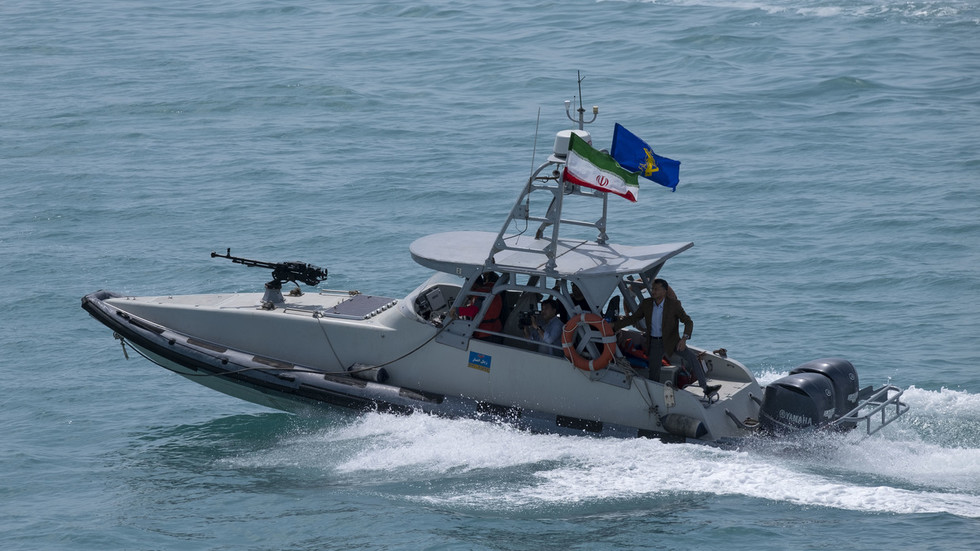
2 Iranian boats were caught laying mines in the Strait of Hormuz, senior US official tells me. The US military eliminated both IRGC vessels and also struck at a SAM (surface to air missile) site in Bandar Abbas that was targeting US warplanes.
“These were defensive strikes.” They do not indicate ceasefire is over, according to two well placed sources.
 
Status
Not open for further replies.
Back
Top Bottom