• Guests may view all public nodes. However, you must be registered to post.

US-Israel/Iran | CF Unstable & Unresolved | April-10th/May-10th | Reporting

Status
Not open for further replies.

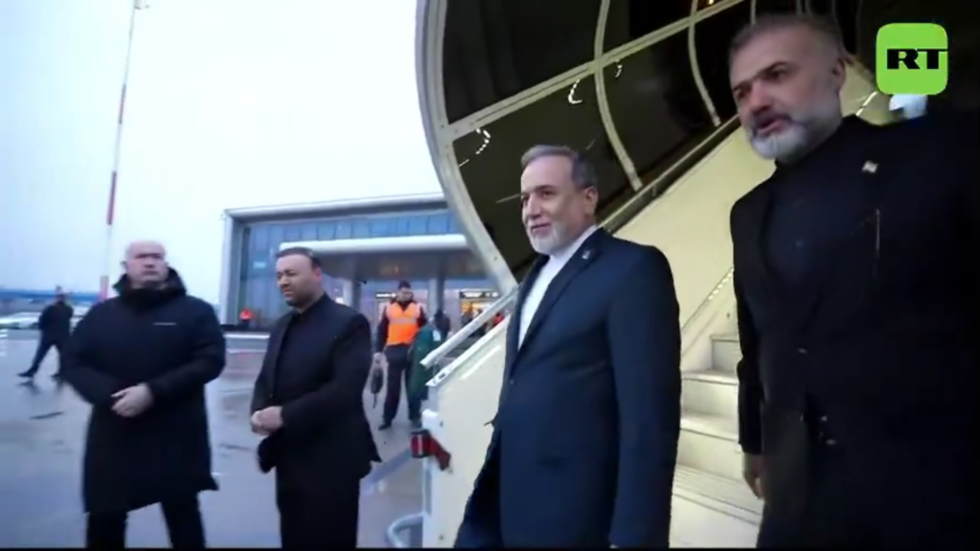
Top Iranian diplomat arrives in Russia

Iranian Foreign Minister Seyed Abbas Araghchi has arrived in Russia, where he is expected to meet President Vladimir Putin and other top officials to discuss the ongoing Middle East conflict amid stalled talks with the US. Russia’s Foreign Ministry earlier confirmed Araghchi’s visit, while Kremlin spokesman Dmitry Peskov said Putin had a meeting with the Iranian diplomat on his schedule.

The trip marks the final leg of Araghchi’s regional tour of Pakistan, Oman, and Russia, which he has described as an effort to “closely coordinate” with partners amid the standoff with Washington and West Jerusalem.
 
🇺🇸🗣️
President Trump said Iran has about three days before its oil pipelines risk explosion from being clogged up, as the country grapples with a shortage of storage space for the oil it produces.

🔗⤵️
It sounds exaggerated, but there’s truth to it. Storage tanks fill quickly, and while Iran does have capacity, somewhere in the range of 40 to 90 million barrels, that space can get used up surprisingly fast under full production. Once those tanks hit their STORAGE LIMIT, there’s no room left to absorb anything, and that’s where the real pressure begins. At that point, Iran is forced into a difficult position. They can either cut production and immediately lose massive daily revenue, easily over $100 million, or keep pumping oil into a system that has nowhere to send it. That tradeoff is brutal: LOSE REVENUE OR DAMAGE INFRASTRUCTURE. If production continues, PRESSURE BUILDUP starts inside pipelines and wells, and the crude itself begins to create problems.
Oil isn’t uniform, it contains heavier components like waxes and asphaltenes that start separating and sticking when flow slows down. This leads to clogging inside tubing and pipelines, reduced efficiency, and in some cases damage to the reservoir itself, which can make future extraction harder and more expensive. As pressure builds, the risks expand beyond just clogging: Equipment is put under stress Safety systems get pushed In more extreme cases, you can see ruptures, longer-term infrastructure damage.
At the same time, this isn’t just about engineering, it’s part of a broader strategy. This approach builds on the idea of MAXIMUM PRESSURE by going beyond financial sanctions and directly targeting Iran’s ability to export oil.
The goal is:
Cut off revenue
Weaken the state’s ability to fund itself
Create internal economic stress that forces a decision
That combination of physical and economic pressure is what’s meant to force movement without direct military escalation.
Meanwhile, the buildup continues. :cool:
 
🇺🇸🚢
Six tankers loaded with Iranian oil have ‌been forced back to Iran by the U.S. blockade in recent days, ship-tracking data shows, underscoring the impact the Iran war is having on traffic through the Strait of Hormuz, a major global oil export route.

🔗⤵️
 
🇺🇸🗣️
The White House has told CBS News that it will not conduct its negotiations with Iran through the media.

“These are sensitive diplomatic discussions and the US will not negotiate through the press,” Assistant White House Press Secretary Olivia Wales said in a statement carried by CBS News.

🔗⤵️
 

Trump reviews peace plan

US President Donald Trump’s national security team is reviewing an Iranian peace plan to halt the war and open the Strait of Hormuz, while postponing talks on its nuclear programme.

Iran’s Foreign Minister Abbas Araghchi meets Russian President Vladimir Putin in St Petersburg and says Tehran is considering a US request to restart negotiations.
 
Status
Not open for further replies.
Back
Top Bottom